
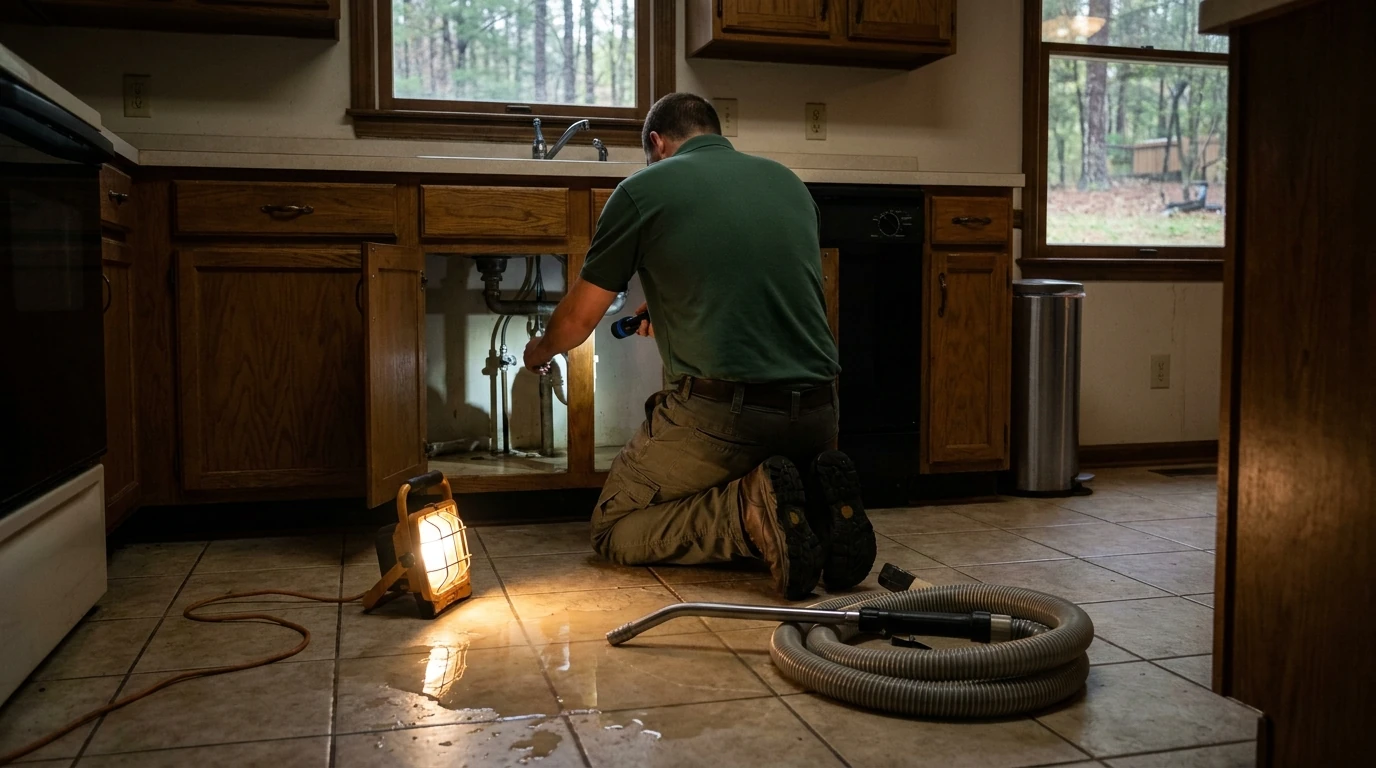
TL;DR: If a pipe just burst in your Middlesex home, shut off the main water valve and the power to the affected area immediately. Then make two calls: a plumber to stop the leak at its source, and a restoration company to start water removal within hours. Both matter. A plumber fixes the pipe, but standing water left untreated for more than 24 to 48 hours risks mold growth and structural damage even after the leak is sealed.
Water is spreading across your floor right now, maybe pooling near the US-264 corridor side of Middlesex or soaking into a crawl space under an older home near Downtown Middlesex. You’ve shut off what you could, and you’re standing there holding your phone, trying to figure out who actually handles this. The honest answer: this is a two-call emergency, not a one-call emergency. One professional stops the water. Another removes it before it destroys your home behind the walls. Here’s exactly what to do in the next ten minutes, who each call is for, and what happens after you make them.
What Do You Do in the First 60 Seconds?
Shut off your home’s main water supply valve first, then cut power to any outlets or fixtures in the flooded area if you can reach the breaker safely without stepping in standing water. These two actions stop the damage from getting worse while you make your calls.
The main shutoff is usually near where the water line enters the house: a basement wall, a crawl space access, or a utility closet. If you don’t know where yours is, now is the time to find out, because every minute the water runs adds square footage to the damage.
If water is near an electrical panel, outlet, or any powered appliance, do not wade through it. Call your power company or wait for a professional rather than risk electrocution. Move anything you can lift (rugs, furniture legs, electronics) away from the water line, but don’t delay the shutoff to save belongings.
Who Do You Call First, a Plumber or a Restoration Company?
Call a plumber first to stop the source, and call a water damage restoration company within the same hour to start drying. A burst pipe is two separate problems: the broken pipe itself, and the water now sitting in your walls, floors, and subfloor.
A plumber’s job ends once the pipe is repaired or replaced. They don’t own extraction equipment, air movers, or dehumidifiers, and most won’t test your drywall or subfloor for retained moisture. That’s a different trade with different training under the ANSI/S500 standard for water damage restoration.
For the restoration half of this, in the Middlesex area, Go Green Restoration of NC runs on a 24/7 schedule and can begin extraction and structural drying the same day the pipe fails. The two calls can happen almost simultaneously: one crew member can be headed your way while the plumber is still en route. Waiting to call a restoration company until after the plumber finishes is the single most common mistake homeowners make, because it adds hours to the drying clock.
Our post on who to call for water damage restoration in Middlesex walks through this same two-call logic in more detail if you want the longer version once the immediate crisis is handled.
What Happens in the First 24 Hours After You Call?
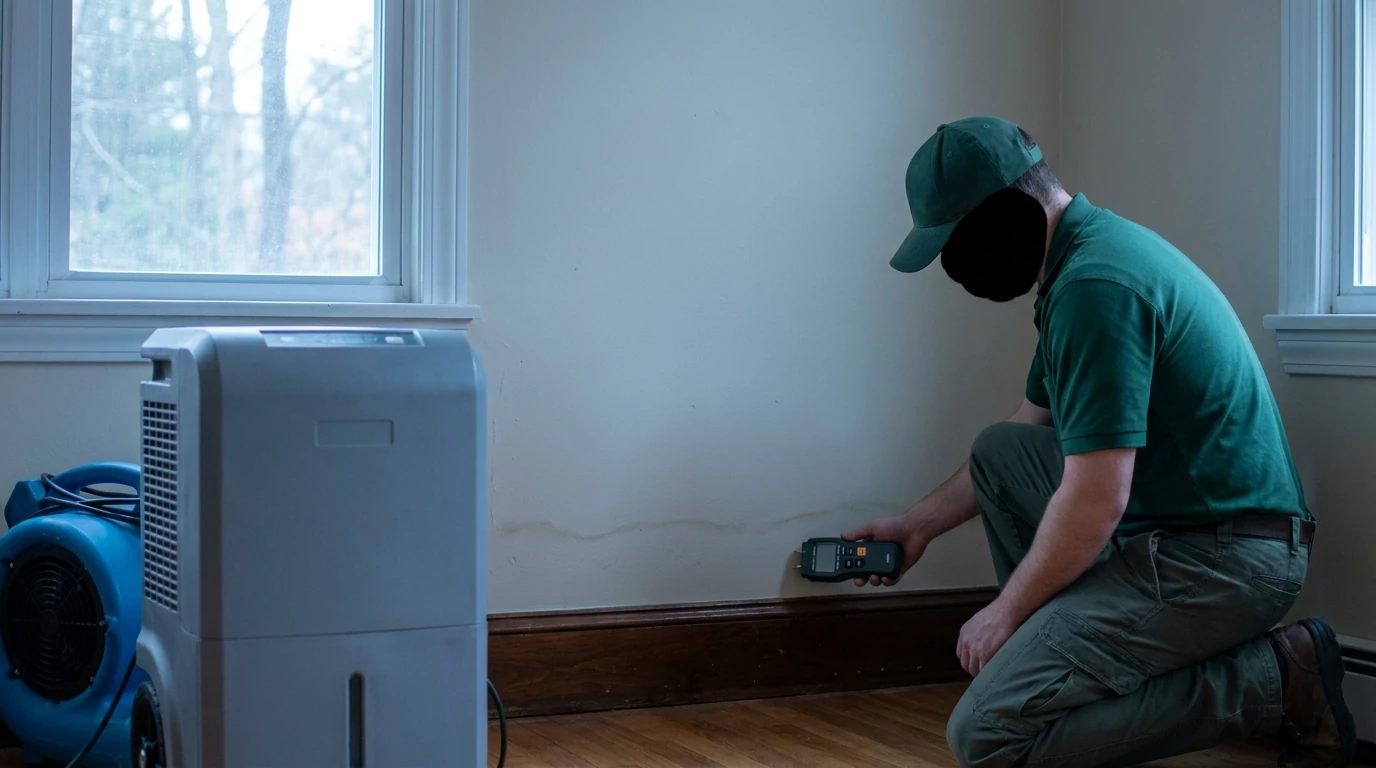
In the first 24 hours, a restoration crew extracts standing water, sets up air movers and dehumidifiers, and documents the damage with photos and moisture readings for your insurance claim. This is the window that determines whether you’re dealing with a drying job or a mold job.
A technician will use a truck-mounted or portable extractor to pull standing water off floors, then check behind baseboards, under flooring, and inside wall cavities with a moisture meter. Anything reading wet gets air movers and, depending on humidity, a dehumidifier sized to the affected square footage.
Expect pulled baseboards, possibly a few inches of drywall cut away near the floor line (a flood cut), and equipment running continuously for 2 to 4 days. The crew should document everything with photos before any demolition, since that record is what your insurance adjuster will want to see. Our burst pipe emergency checklist covers the step-by-step version of this if you want to track it yourself.
Will Insurance Cover a Burst Pipe in Middlesex?
Most homeowners policies cover sudden, accidental water damage from a burst pipe, including the cost to dry and repair the affected structure. Coverage typically does not extend to the plumbing repair itself or to damage from a leak that was gradual and ignored for weeks.
According to the Insurance Information Institute, standard homeowners policies generally pay for sudden water damage events but exclude damage tied to lack of maintenance. That distinction is why documentation matters: dated photos, moisture logs, and a written scope of work from the restoration crew are what support your claim. Your deductible applies before coverage kicks in, and your adjuster will want to see the damage documented before repairs begin, not after. If you have questions about your specific policy, the NC Department of Insurance consumer resources are a neutral place to check your rights.
Once the water is out and the drying equipment is running, the immediate emergency is over. The next step is getting a written scope of the repair work, whether that’s drywall, flooring, or cabinetry affected by the leak.
About Go Green Restoration of NC
Go Green Restoration of NC is based in Middlesex, NC and answers calls 24/7 across Nash, Johnston, and Wake County communities, including Raleigh, Durham, Rocky Mount, Wilson, and Smithfield. Their crews handle water extraction, structural drying, mold remediation, and reconstruction after events like burst pipes, appliance leaks, and storm intrusion. This guide was prepared with input from the Go Green Restoration team, led by Todd Wilkins.
Need help now? Call Go Green Restoration of NC at (919) 906-5473.