
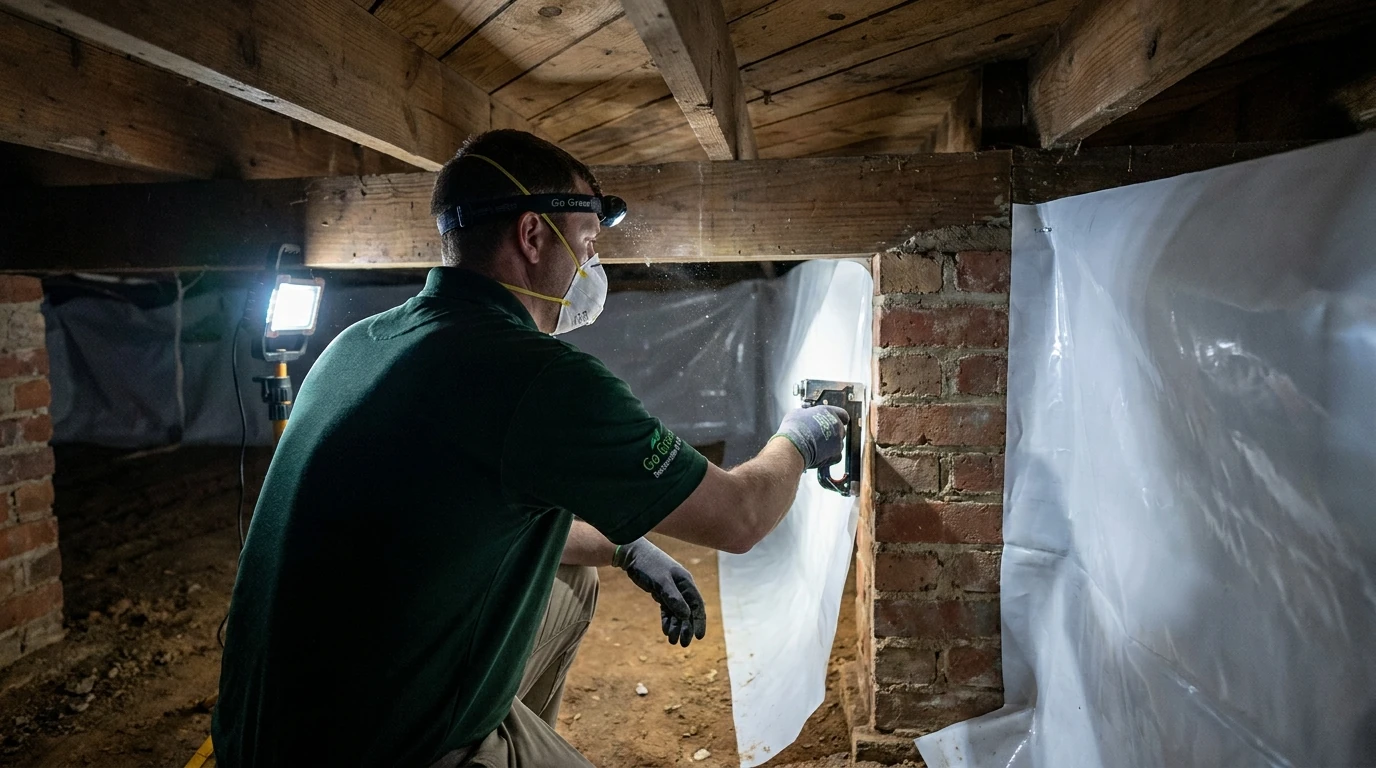
TL;DR: Full crawl space encapsulation in North Carolina typically costs $5,000 to $15,000, or roughly $5 to $12 per square foot, depending on the size of the crawl space, how much moisture is already present, and whether a dehumidifier is added. A vapor barrier alone, without sealing vents or installing a liner on the foundation walls, runs $1,500 to $5,000. Every crawl space is different, and a written scope should always come before a price is final.
If you just got a home inspection back on an older bungalow near Durham’s Trinity Park or Duke Park and the report flagged “excess crawl space moisture” or a musty smell working its way up through the floor vents, you’re probably trying to figure out what fixing it is going to cost before closing. The same question comes up a lot on the well-and-crawl-space homes around Zebulon’s rural edges, where there’s no basement to fall back on and the crawl space does all the work of keeping ground moisture away from the floor joists. Here’s what the numbers actually look like.
How much does crawl space encapsulation cost in North Carolina?
Full crawl space encapsulation typically runs $5,000 to $15,000 for an average 1,200 to 1,800 square foot crawl space, with most Triangle-area homeowners landing between $7,000 and $11,000 for a complete job. The spread depends mostly on moisture severity, crawl space height, and how many add-ons go in.
| Scope of work | Typical cost range |
|---|---|
| Vapor barrier only (6-12 mil poly, no sealed seams or vents) | $1,500 - $5,000 |
| Standard encapsulation (barrier + taped seams + sealed vents) | $5,000 - $9,000 |
| Full encapsulation (barrier + foundation wall liner + sealed vents + insulation) | $8,000 - $15,000 |
| Dehumidifier add-on | $1,200 - $2,500 |
| Sump pump add-on (for standing water) | $1,500 - $3,000 |
| Structural repair or joist sistering (if rot is present) | $500 - $3,000+ per affected area |
Older housing stock, like the pier-and-beam foundations common around Trinity Park and Duke Park in Durham, often adds cost because the crawl space is tighter to work in and sometimes has existing wood rot that needs repair before the barrier goes down. Newer slab-adjacent crawl spaces in growing subdivisions tend to run toward the lower end of the range.
What does crawl space encapsulation cost per square foot?
Expect to pay $5 to $12 per square foot for crawl space encapsulation in North Carolina. Vapor-barrier-only work sits near the bottom of that range, and full encapsulation with insulation and a dehumidifier sits near the top.
Crawl space height matters more than most homeowners expect. A space with less than 18 inches of clearance takes longer to work in, and labor is a big share of the per-square-foot number. Standing water, visible mold on the joists, or an active plumbing leak all push the price up because that has to be addressed before the barrier is installed, not after.
Vapor barrier only vs. full encapsulation: what’s the real price difference?
A vapor barrier alone covers the ground but leaves vents, foundation walls, and seams unsealed, which is why it costs $1,500 to $5,000 less than full encapsulation. Full encapsulation treats the crawl space as a sealed, conditioned part of the building envelope, not just a dirt floor with plastic over it.
A vapor-barrier-only job is a reasonable starting point for a crawl space with mild humidity and no standing water. It slows ground moisture from evaporating up into the floor assembly, but it doesn’t stop humid outside air from coming in through foundation vents during a Triangle summer. Full encapsulation seals those vents, runs a liner up the foundation walls, and tapes every seam in the ground barrier, which is what actually gets relative humidity down into a range that stops mold growth before it starts. Our crawl space encapsulation page breaks down what’s included at each tier.
Does adding a dehumidifier change the cost?
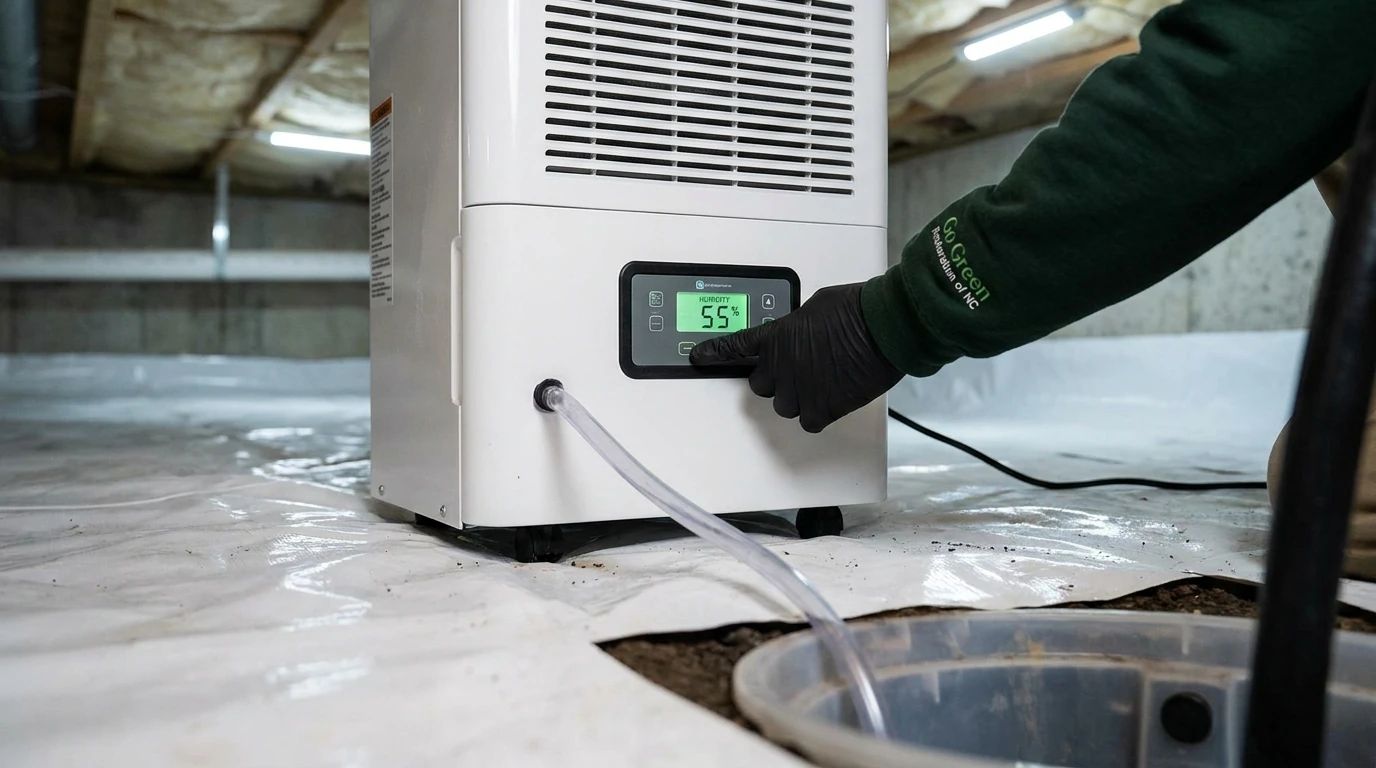
Yes, a dedicated crawl space dehumidifier typically adds $1,200 to $2,500 installed, and in Eastern North Carolina’s humidity it’s usually the difference between a dry crawl space and one that’s sealed but still sitting at 70% relative humidity.
Sealing a crawl space without conditioning it can trap moisture that’s already there instead of removing it. The EPA notes that mold can begin growing on damp material within 24 to 48 hours, which is also why we cover the same window in our post on how fast mold grows after water damage. A self-draining dehumidifier sized for the square footage keeps relative humidity under roughly 55%, which is the range most restoration contractors target for wood-framed crawl spaces.
What are the downsides to crawl space encapsulation?
The real downsides are upfront cost, ongoing dehumidifier maintenance, and the fact that encapsulation doesn’t fix the root cause of a moisture problem on its own. It’s a treatment for the symptom unless the source is addressed first.
A few things worth knowing before you sign a contract:
- It won’t fix a grading or gutter problem. If water is pooling against the foundation because of poor drainage, encapsulation traps that moisture inside a sealed space instead of letting it evaporate out through the old vents. Grading and gutters should be corrected first.
- Sealed vents can run into local code questions. Some jurisdictions require a conditioned crawl space to meet specific mechanical ventilation or dehumidification standards once vents are closed off. A contractor should know your county’s requirements before closing vents permanently.
- The dehumidifier needs upkeep. Filters need periodic cleaning and the unit itself has a service life, typically 5 to 10 years, so budget for that as an ongoing cost, not a one-time expense.
- It doesn’t replace a mold inspection. If there’s already visible mold growth on the joists or subfloor, that needs to be addressed as a remediation project, not just sealed behind a vapor barrier.
We walked through a full encapsulation job in detail in our Smithfield crawl space post if you want to see what the work actually looks like start to finish.
What should you do before you get a quote?
Start with a moisture and mold inspection rather than a price quote alone, so you know whether you’re buying a vapor barrier, a full encapsulation, or a mold remediation project first. The three are priced very differently, and a contractor should be able to tell you which one you actually need.
Bring a flashlight and look for standing water, visible mold on wood surfaces, and sagging or soft insulation hanging from the joists. If insulation is already wet or moldy, that typically needs to come out before anything else goes in, which is a separate line item from encapsulation itself; our attic and crawl space insulation post covers what that looks like on a typical job near Zebulon. Ask for a written scope that separates the vapor barrier, vent sealing, insulation, and dehumidifier into line items so you can see exactly what you’re paying for.
Homeowners insurance generally does not cover crawl space encapsulation, since it’s considered preventive maintenance rather than sudden, accidental damage; the Insurance Information Institute’s guide to standard coverage is a good plain-language reference if you want to confirm that against your own policy.
Go Green Restoration of NC provides written estimates before any encapsulation work begins, covering homes from Middlesex out through Durham, Raleigh, Wilson, and the surrounding Triangle-area counties. Request a crawl space assessment if you want a number specific to your house rather than a range.
About Go Green Restoration of NC
Go Green Restoration of NC is based in Middlesex, NC and serves homeowners across the Triangle, including Durham, Raleigh, Wilson, and Rocky Mount. This guide was prepared with input from Todd Wilkins and the Go Green Restoration of NC team, who handle crawl space encapsulation, mold inspection and remediation, water damage restoration, and related insulation work across the region. The company is reachable 24/7 for moisture and water intrusion calls.
Need help now? Call Go Green Restoration of NC at (919) 906-5473.