
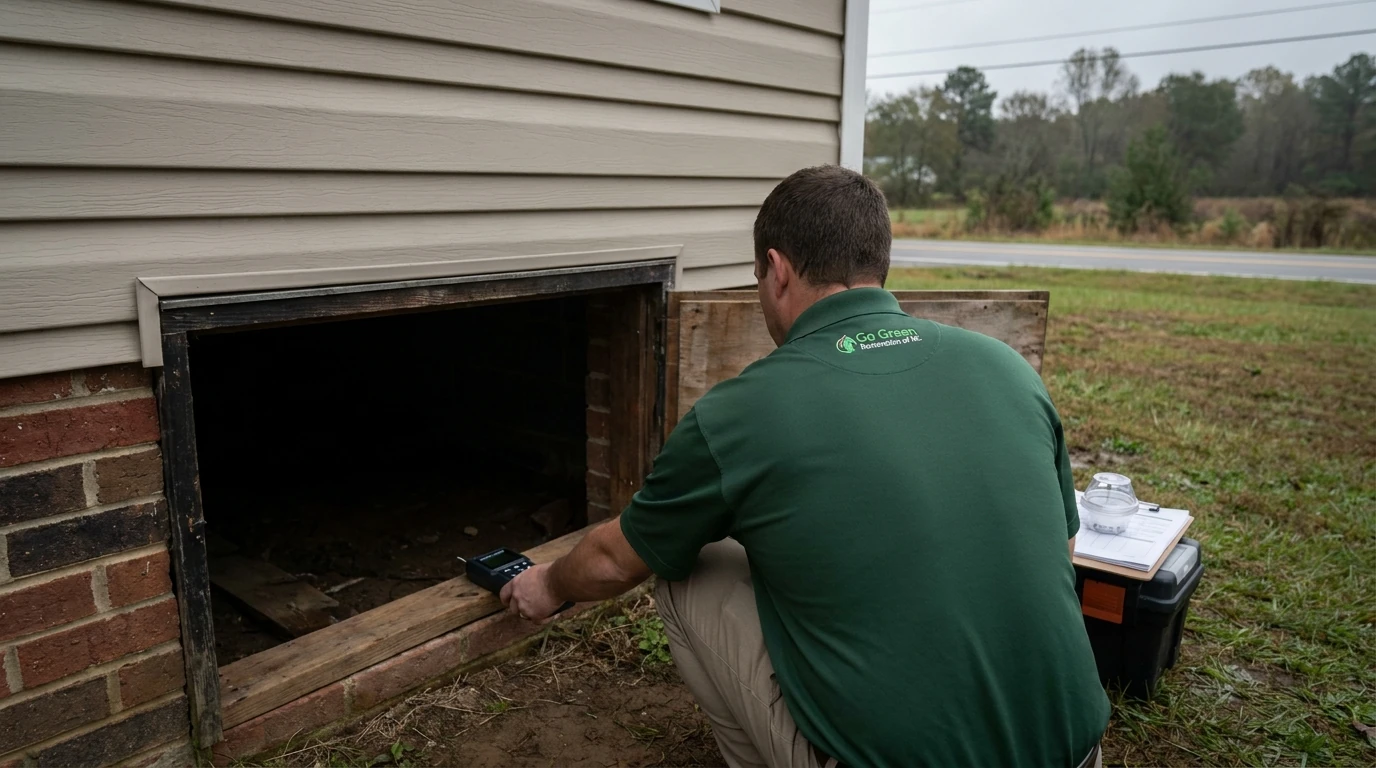
TL;DR: In Middlesex, NC, mold remediation typically costs between $500 for a small, contained area and $10,000 or more for a whole-house job with structural rebuild. Most homeowners dealing with a single bathroom or closet with surface mold pay somewhere between $1,500 and $3,500. The final number depends on how much square footage is affected, whether materials have to be removed and replaced, and whether the moisture source causing the mold has already been fixed. Homeowners insurance rarely covers the mold itself unless it followed a sudden, covered water loss.
If a home inspector just flagged mold in a crawl space during a sale near Downtown Middlesex, or a musty smell behind a bathroom vanity off the US-264 corridor has you searching for a number before you call anyone, here’s what actually lands on the invoice and why it varies so much from job to job.
How much does mold remediation cost in Middlesex, NC?
Most mold remediation jobs in this part of Nash and Johnston County fall between $500 and $6,000, with whole-house jobs running higher. The price scales with square footage, the type of material affected, and whether containment and rebuild are involved.
| Scope of Mold Remediation | Typical Cost Range |
|---|---|
| Small, contained area (10-30 sq ft, bathroom or closet) | $500 - $1,500 |
| Moderate growth (one room, or a section of crawl space) | $1,500 - $3,500 |
| Crawl space mold tied to a moisture source | $1,500 - $5,000 |
| Whole room with drywall and insulation removal | $3,000 - $6,000 |
| Whole-house remediation with rebuild | $5,000 - $10,000+ |
| HVAC or duct contamination (add-on) | $500 - $1,500 |
These are typical industry ranges, not a quote. Every home is different, and a written scope after an in-person inspection is the only way to know the real number for a specific property.
What drives mold remediation costs up or down?
Five factors move the price more than anything else: square footage, material type, accessibility, containment requirements, and whether rebuild is needed. A 15-square-foot patch on tile costs far less than the same footprint on drywall and subfloor.
Porous materials (drywall, insulation, carpet padding, wood framing) almost always get removed rather than cleaned, because mold grows into the material itself. Non-porous surfaces like tile, metal, and sealed concrete can often be cleaned and treated in place, which keeps costs down.
Accessibility matters too. Crawl space work under a Middlesex-area home with low clearance takes longer and costs more per square foot than an open bathroom. Jobs that require full containment and negative air pressure under the ANSI/IICRC S520 standard add labor and equipment time, and any job that triggers reconstruction (new drywall, trim, paint, flooring) adds a second line item on top of the remediation itself. EPA guidance on mold cleanup also notes that the underlying moisture source has to be fixed first, or the mold returns and the homeowner pays twice.
Does homeowners insurance cover mold remediation cost?
Homeowners insurance typically covers mold remediation only when the mold grew out of a sudden, covered water event, like a burst supply line, not from a slow leak or ongoing humidity. Long-term seepage, poor ventilation, and deferred maintenance are almost always excluded.
If a pipe burst and mold started growing in the drywall within the next day or two, that’s often covered under the same claim as the water damage, sometimes with a mold-specific sublimit in the policy. If the mold came from a crawl space that’s been damp for years, or a roof leak nobody caught, it’s typically a homeowner expense. Triple-I’s overview of standard homeowners coverage explains this distinction in more detail, and it’s worth reading the mold section of a specific policy before assuming coverage either way.
Documentation matters regardless of who pays. Photos, moisture readings, and a written scope of work protect a claim and also protect a homeowner who ends up paying out of pocket, since that paperwork is what a buyer’s lender or a future inspector will want to see.
What does the mold remediation process actually involve?
A proper mold remediation job follows a set sequence: inspect and test, contain the area, remove contaminated material, dry and correct the moisture source, then clear-test before closing up. Skipping steps is usually how mold comes back.
- Inspection and testing. A technician identifies the extent of growth and, often, takes an air or surface sample to confirm species and severity (see our guide on how to test for mold for the DIY-kit-versus-pro-inspection tradeoffs).
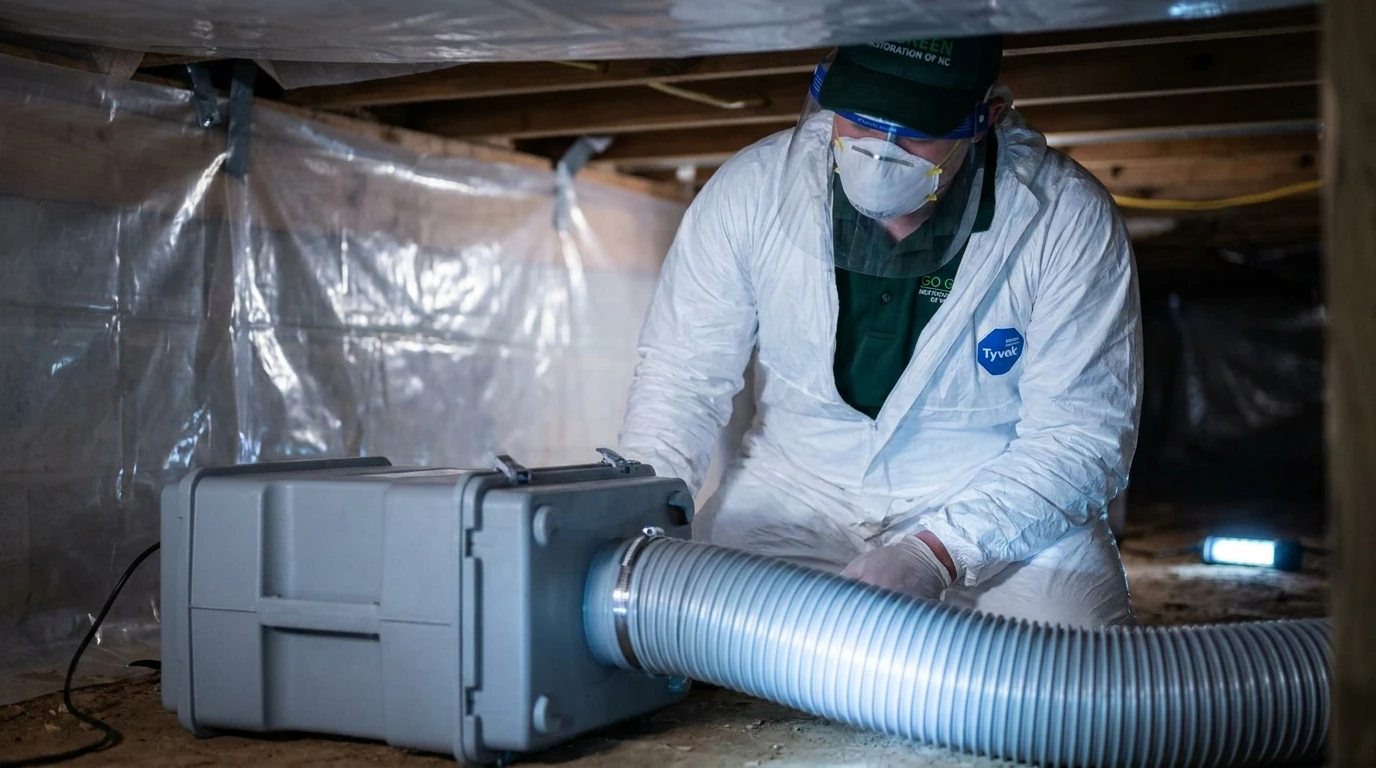
- Containment. Poly sheeting and negative air pressure isolate the work area so spores don’t spread to the rest of the home during removal.
- Removal. Porous, contaminated materials come out; non-porous surfaces get HEPA-vacuumed and treated with an antimicrobial.
- Drying and moisture correction. Dehumidifiers and air movers bring humidity down, and the actual source (a leak, poor crawl space ventilation, a failed vapor barrier) gets fixed. Without this step, the job doesn’t hold.
- Clearance and rebuild. A post-remediation check confirms the area is clean, then drywall, insulation, and trim go back in if removal was needed.
If the smell or staining has been there a while, our post on signs of hidden mold covers what to look for before it reaches this stage.
Who should you call for mold remediation in Middlesex?
For a job like this, call a company that does both inspection/testing and remediation under one roof, so there’s no conflict between who finds the problem and who gets paid to fix it. Go Green Restoration of NC offers mold inspection and testing as well as remediation and the reconstruction work that follows it, and can put a written scope in front of a homeowner before any work starts.
A same-company approach also helps when a claim is involved: the same team that documents the moisture source and the mold extent can hand that paperwork to an adjuster. For comparison shopping, our rundown of mold remediation companies in Middlesex covers what to ask any provider before signing.
A home with mold doesn’t need to stay that way through another humid Eastern NC summer. Request a mold inspection or review the full mold remediation service page to see what a scope of work typically includes.
About Go Green Restoration of NC
The company is based in Middlesex, NC, and serves Nash, Johnston, and Wake County communities including Raleigh, Durham, Rocky Mount, Wilson, and Smithfield. Its service lines include mold inspection and testing, mold remediation, water and flood damage restoration, crawl space encapsulation, and reconstruction. The team is available 24/7 and works directly with homeowners and insurance adjusters to document covered losses from inspection through rebuild.
Need help now? Call Go Green Restoration of NC at (919) 906-5473.