
24/7 Emergency Water Removal & Cleanup in Middlesex
24/7 emergency water removal & cleanup in Middlesex and surrounding areas. Insurance billing accepted. Call (919) 906-5473.
Water pooling under your baseboards or seeping up through the carpet in Middlesex? Every hour that water sits on flooring or inside wall cavities, it moves further into materials that aren’t designed to handle it, subfloor, drywall, insulation, framing. Once carpet pad is saturated or water has wicked up drywall past the baseboard line, the clock on structural damage and secondary mold growth starts running. We answer 24/7. Call (919) 906-5473 and we’ll get a crew scheduled to start extraction before the loss spreads further.
What emergency water removal & cleanup actually involves
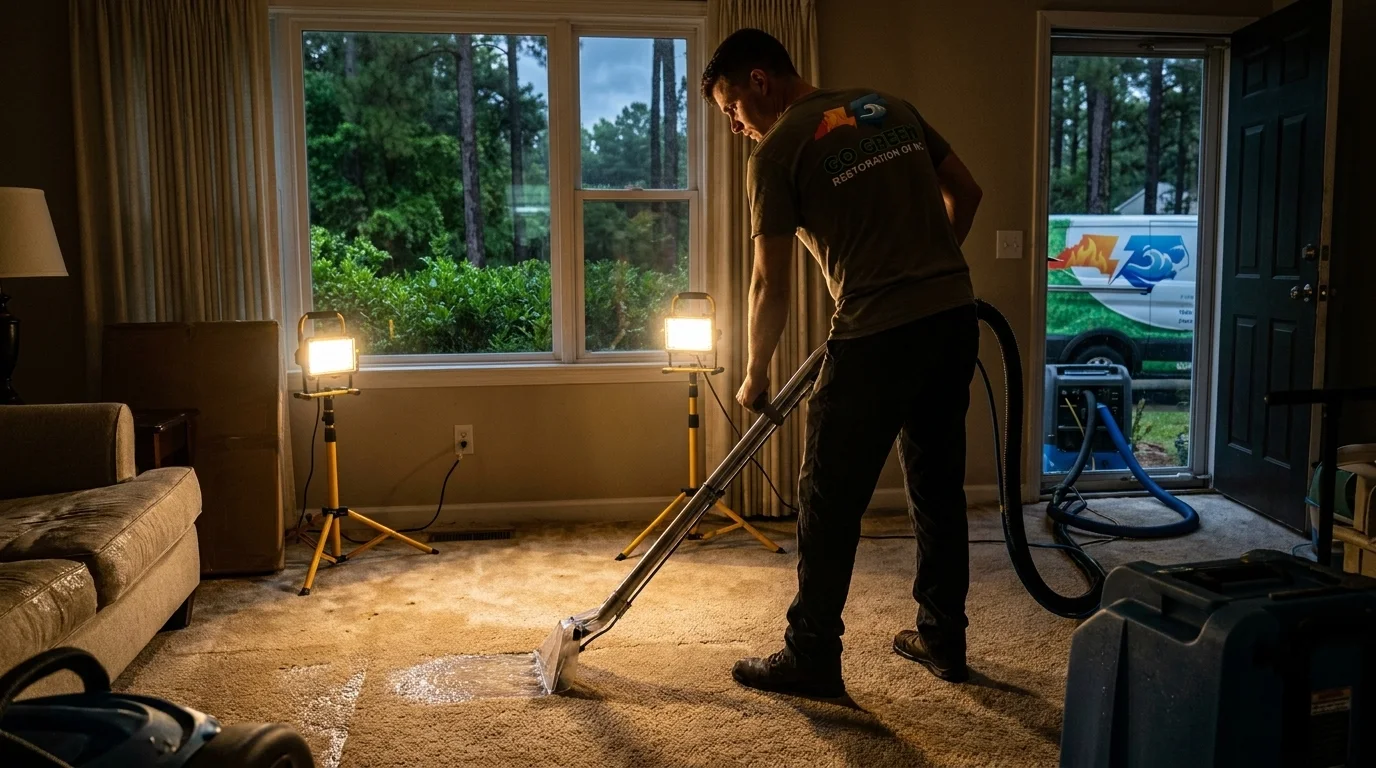
Emergency water removal is the physical extraction of standing or trapped water, followed by the structural drying that prevents a wet building from becoming a moldy one. This isn’t a wet-vac and a box fan. A real extraction uses truck-mounted or portable extraction units rated for continuous pull on carpet, pad, hardwood, and tile. Depending on the source, category water classification matters too: clean water from a supply line behaves very differently than water that’s backed up through a drain or sat long enough to turn contaminated. Equipment on a typical job includes submersible pumps for standing water over an inch or two, extraction wands for carpet and pad, and in many cases, pulling carpet pad entirely since pad almost never dries fast enough to prevent odor and mold. After extraction comes structural drying: air movers positioned to create airflow across wet surfaces, and dehumidifiers sized to the cubic footage of the affected area, not just dropped in a corner. Drying timelines vary by material. Drywall and exposed studs can dry in a few days under the right airflow. Hardwood and subfloor under tile take considerably longer and sometimes require specialty drying mats or injection systems to pull moisture out of the assembly without tearing it apart.
Our process
- Source control and standing water extraction. Before anything else, the water source gets identified and stopped if it hasn’t been already, then standing water is pumped or extracted out using truck-mount or portable units.
- Moisture mapping. Moisture meters and sometimes thermal imaging get used to find where water has traveled, under flooring, behind baseboards, inside wall cavities, so nothing gets missed because it looks dry on the surface.
- Material assessment and removal where needed. Saturated carpet pad, swollen baseboards, or drywall that’s wicked water past a salvageable point get removed so drying equipment isn’t fighting a losing battle against materials that should come out.
- Structural drying and daily monitoring. Air movers and dehumidifiers get placed based on the moisture map, then checked and logged daily, adjusting equipment as materials dry at different rates.
- Containment for Category 2 or 3 water. If the water is contaminated, from a sewage backup or water that’s been standing long enough to turn, affected materials get contained and handled separately from the clean-water portions of the job.
What separates a good water removal response from a bad one
The biggest mistake in water cleanup is treating it like a surface problem. A crew that pulls visible standing water, runs a couple of fans overnight, and calls it done is leaving moisture behind walls and under flooring that will show up as a mold problem in two to three weeks. Moisture meters should be used on every affected wall and floor, not just the areas that look wet. Carpet pad that’s been saturated for more than a few hours should come out, drying pad in place almost never works and traps moisture against the subfloor. Adjusters reviewing a water claim look for documented moisture readings over time, not just a single before-and-after photo, because that log is what proves the structure was actually dried to standard rather than just dried to the point the equipment got picked up. Good operators also distinguish category of water correctly from the start, since treating contaminated water like clean water is both a health issue and a documentation gap that can come back on a claim.
What does emergency water removal & cleanup cost?
Costs depend on the size of the affected area, the category of water, and how far it traveled before extraction started. These are typical industry ranges, not a quote, every loss is different, and Go Green Restoration of NC provides a written scope of work before any work begins.
| Scenario | Typical range |
|---|---|
| Single room, clean water, minimal saturation | $1,200 - $3,500 |
| Multiple rooms, clean water, carpet and pad removal | $3,000 - $7,500 |
| Category 2 water (appliance or drain backup) | $3,500 - $9,000 |
| Category 3 water (sewage or flood contamination) | $5,000 - $15,000+ |
| Hardwood or tile floor affected, specialty drying needed | $4,000 - $10,000 |
Most homeowners insurance policies cover sudden and accidental water damage, such as a burst pipe or failed appliance, but typically exclude damage from gradual leaks or outside flooding unless a separate flood policy is in place.
Seasonal & regional considerations
Middlesex sees its share of freeze-thaw swings in winter, and a pipe that freezes overnight and bursts the next afternoon is one of the more common calls we get in the colder months. In summer, the humidity across eastern North Carolina means a wet structure that isn’t dried properly doesn’t just stay damp, it actively grows mold faster than it would in a drier climate, which is part of why fast extraction matters more here than in places with lower ambient humidity.
Service area
We respond to emergency water calls throughout Middlesex and the surrounding communities in Nash and Wilson counties, including homes and businesses on well water and septic systems common to the area’s older housing stock.
Standing water doesn’t wait for business hours, and neither do we. Call (919) 906-5473 to schedule emergency water extraction and get a drying plan started before the damage spreads further into your home.
Frequently Asked Questions
Does homeowners insurance cover emergency water removal and cleanup?
How long does structural drying take after a water extraction?
Can carpet and pad be saved after a water loss?
What's the difference between clean water and contaminated water cleanup?
What should I do while waiting for an extraction crew to arrive?
Looking for the best emergency water removal & cleanup company in Middlesex?
Go Green Restoration of NC provides emergency water removal & cleanup in Middlesex, NC and the surrounding area. We answer calls 24/7 — call (919) 906-5473 for immediate help.
Need Emergency Water Removal & Cleanup now?
We respond 24/7 across Middlesex and surrounding NC cities.
Related Coverage
- Our Restoration Services
- Contact Go Green Restoration of NC
- Restoration Services in Archer Lodge
- Restoration Services in Clayton
- Restoration Services in Durham
- Restoration Services in Elm City
- Restoration Services in Kenly
- Restoration Services in Knightdale
- 24/7 Emergency Water Removal & Cleanup in Lake Royale
- Restoration Services in Louisburg
- Restoration Services in Nashville
- Restoration Services in Pine Level
- 24/7 Emergency Water Removal & Cleanup in Raleigh
- 24/7 Emergency Water Removal & Cleanup in Rocky Mount
- 24/7 Emergency Water Damage Restoration in Middlesex