
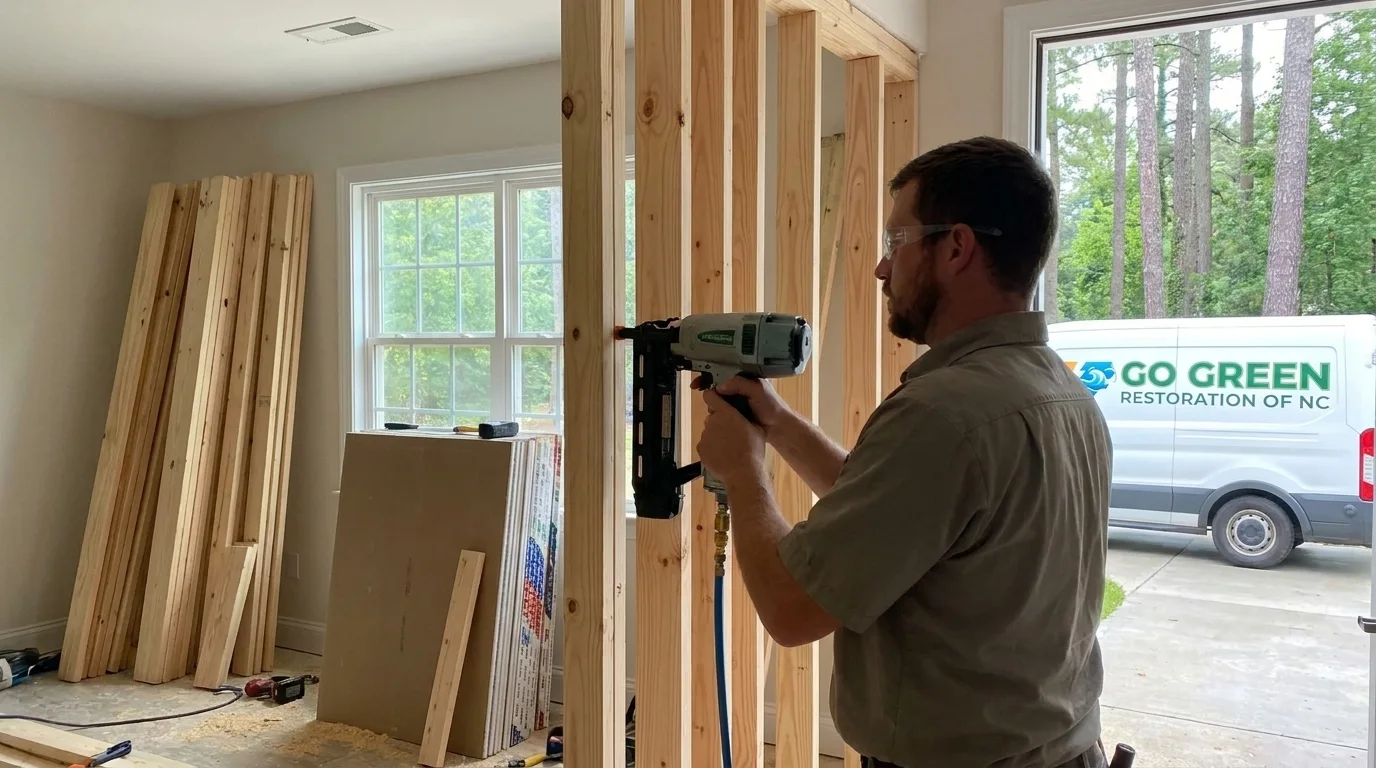
Reconstruction Services in Middlesex
24/7 reconstruction services in Middlesex and surrounding areas. Insurance billing accepted. Call (919) 906-5473.
A kitchen that’s been gutted to the studs after a pipe burst, a fire-damaged addition waiting on a permit, a bathroom subfloor that failed inspection because nobody checked the joists before closing it back up: reconstruction is the phase that happens after extraction, drying, or soot removal is finished and a property still isn’t livable. It’s framing, drywall, flooring, and finish work done to code, not a patch job that looks fine until the next walkthrough.
For homeowners in Middlesex and the surrounding Nash and Wilson County area, reconstruction services middlesex usually means coordinating with a county permitting office, matching existing materials in a home that may be decades old, and making sure the structural reconstruction actually addresses what caused the damage in the first place, not just what’s visible on the surface.
What Reconstruction Services actually involves
Post-damage reconstruction covers everything from replacing a single section of subfloor to full post-disaster rebuilding after a fire or major flood. The scope depends entirely on what was removed during mitigation: if drywall was cut back two feet for drying, reconstruction means new drywall, tape, texture, and paint matched to the existing wall. If framing members were compromised by fire or prolonged moisture, it means sistering or replacing studs and joists before anything gets closed back up.
Timelines vary widely. A single bathroom with a failed subfloor might take a week from scope to final punch list. A fire damage reconstruction project involving load-bearing walls, electrical, and roofing can run several weeks once permits and inspections are factored in. Materials matter too: a 1970s ranch with original hardwood or plaster walls takes longer to match than a newer build with standard drywall and laminate flooring.
Our process
- Scope of work. Every reconstruction project starts with a written scope that documents what was removed, what needs replacing, and what code requires given the extent of the damage. This becomes the basis for both the work order and the insurance claim.
- Permits and inspections. Structural work, electrical, and plumbing typically require permits through the local building department. We pull what’s required before framing begins so the job doesn’t stall at final inspection.
- Framing and rough-in. Structural members are replaced or reinforced first. Electrical, plumbing, and HVAC rough-in happens before walls close, and this is the point where rough inspections are usually required.
- Insulation, drywall, and finishing. Once rough-in passes inspection, insulation goes in, drywall is hung and finished, and trim, flooring, and paint bring the space back to a livable condition.
- Final walkthrough. A final inspection closes out any permits, and we walk the space with the homeowner to confirm the finish work matches the agreed scope before calling the job complete.
What separates a good reconstruction response from a bad one
The most common mistake is closing up a wall or floor before confirming the framing underneath is actually dry and structurally sound. If moisture readings weren’t documented before drywall went back up, there’s no way to prove later that the space was properly dried, which becomes a problem if hidden mold shows up six months later.
A second issue is mismatched scope between mitigation and reconstruction. If the company that dried the house isn’t the one rebuilding it, details get lost: what was cut, where, and why. Keeping mitigation and reconstruction under one roof means the same documentation, moisture logs, and photos carry straight through to the rebuild.
Insurance adjusters generally look for three things: an itemized scope that matches the cause of loss, photos showing the condition before materials were removed, and code-compliant work that won’t get flagged at inspection. Skipping permits to save time is a common shortcut among less careful operators, and it almost always costs more later when a buyer’s inspector or a future adjuster finds unpermitted work.
What does Reconstruction Services cost?
Reconstruction costs vary more than almost any other restoration service because the scope depends entirely on what was damaged and how much structural work is involved. Typical industry costs run from a few thousand dollars for a single room to well into six figures for a full rebuild after major fire or flood damage. Every loss is different, and Go Green Restoration of NC provides a written scope of work with itemized pricing before any reconstruction begins.
| Scenario | Typical range |
|---|---|
| Single room drywall and flooring replacement | $2,500 - $7,000 |
| Bathroom subfloor and fixture rebuild | $4,000 - $12,000 |
| Kitchen reconstruction after water or fire damage | $8,000 - $25,000 |
| Partial structural rebuild (framing, electrical, drywall) | $20,000 - $60,000 |
| Full room addition or major fire rebuild | $60,000 - $150,000+ |
Homeowners insurance typically covers reconstruction costs tied to a covered peril, such as fire or a sudden pipe failure, though coverage for code-upgrade requirements and pre-existing conditions varies by policy.
Seasonal & regional considerations
Middlesex summers bring heat and humidity that can slow drywall finishing and paint cure times if a space isn’t properly conditioned during the job. Winter cold snaps occasionally freeze and burst pipes in older homes with underinsulated crawlspaces, which is when reconstruction often follows close behind emergency water removal. Older housing stock throughout the area, including homes with plaster walls or original hardwood, sometimes requires sourcing matched materials rather than standard big-box replacements.
Service area
Go Green Restoration of NC handles reconstruction services for Middlesex and the surrounding communities, including Zebulon, Wilson, and other towns across Nash and Wilson Counties.
If a mitigation job has left your home or business torn open and waiting on next steps, get a reconstruction scope of work from Go Green Restoration of NC at (919) 906-5473 and find out what it will actually take to close the space back up.
Frequently Asked Questions
Does homeowners insurance cover reconstruction services?
Do I need a permit for reconstruction work after water or fire damage?
How do you decide what gets replaced versus repaired?
Can you match existing flooring and trim in an older home?
How long does a typical reconstruction project take from scope to completion?
What happens if hidden damage is found once walls are opened up?
Looking for the best reconstruction services company in Middlesex?
Go Green Restoration of NC provides reconstruction services in Middlesex, NC and the surrounding area. We answer calls 24/7 — call (919) 906-5473 for immediate help.
Need Reconstruction Services now?
We respond 24/7 across Middlesex and surrounding NC cities.
Related Coverage
- Our Restoration Services
- Contact Go Green Restoration of NC
- Restoration Services in Archer Lodge
- Restoration Services in Clayton
- Restoration Services in Durham
- Restoration Services in Elm City
- Restoration Services in Kenly
- Restoration Services in Knightdale
- Restoration Services in Lake Royale
- Restoration Services in Louisburg
- Restoration Services in Nashville
- Restoration Services in Pine Level
- Restoration Services in Raleigh
- Restoration Services in Rocky Mount