
24/7 Emergency Sewage Cleanup and Sanitization in Middlesex
24/7 emergency sewage cleanup and sanitization in Middlesex and surrounding areas. Insurance billing accepted. Call (919) 906-5473.
Sewage backup in your home or business? Call Go Green Restoration of NC now at (919) 906-5473. We answer 24/7 because raw sewage doesn’t wait for business hours, and neither do the bacteria, viruses, and parasites it carries into your walls, flooring, and air.
A sewage backup is different from any other kind of water loss. The water backing up through a floor drain, toilet, or sewer line cleanout is classified as Category 3, the most contaminated water category there is, meaning it’s treated as biologically hazardous from the first minute it touches your home. That changes everything about how the loss is handled: what gets removed versus dried, what protective equipment the crew wears, and how long the space stays off limits to your family or employees. If you’re smelling sewage odor, hearing gurgling in your drains, or watching water rise from a floor drain in Middlesex, the clock that matters most is the one measuring how long contaminated water sits against drywall, subfloor, and insulation.
What Sewage Cleanup and Sanitization actually involves
Sewage cleanup starts with identifying the source, whether it’s a septic tank overflow, a sewer line backup from tree root intrusion, a municipal line surcharge during heavy rain, or a failed lift station. Crews extract standing sewage with truck-mounted or portable pumps rated for solids, then remove any porous material the water touched: carpet and pad, drywall up to the waterline, baseboards, and insulation. Porous materials that absorb Category 3 water can’t be sanitized back to a safe condition, so they come out rather than getting dried in place. What remains (framing, subfloor, concrete) gets cleaned, treated with an EPA-registered antimicrobial, and monitored with moisture meters until it reads dry. Depending on how far the contamination traveled and how long it sat, this process typically runs from two to five days before reconstruction can start.
Our process
- Source control and containment. Before anything else, we identify and stop the source, whether that means closing a valve, coordinating with a plumber on a line blockage, or containing a septic overflow so it doesn’t spread further across the property.
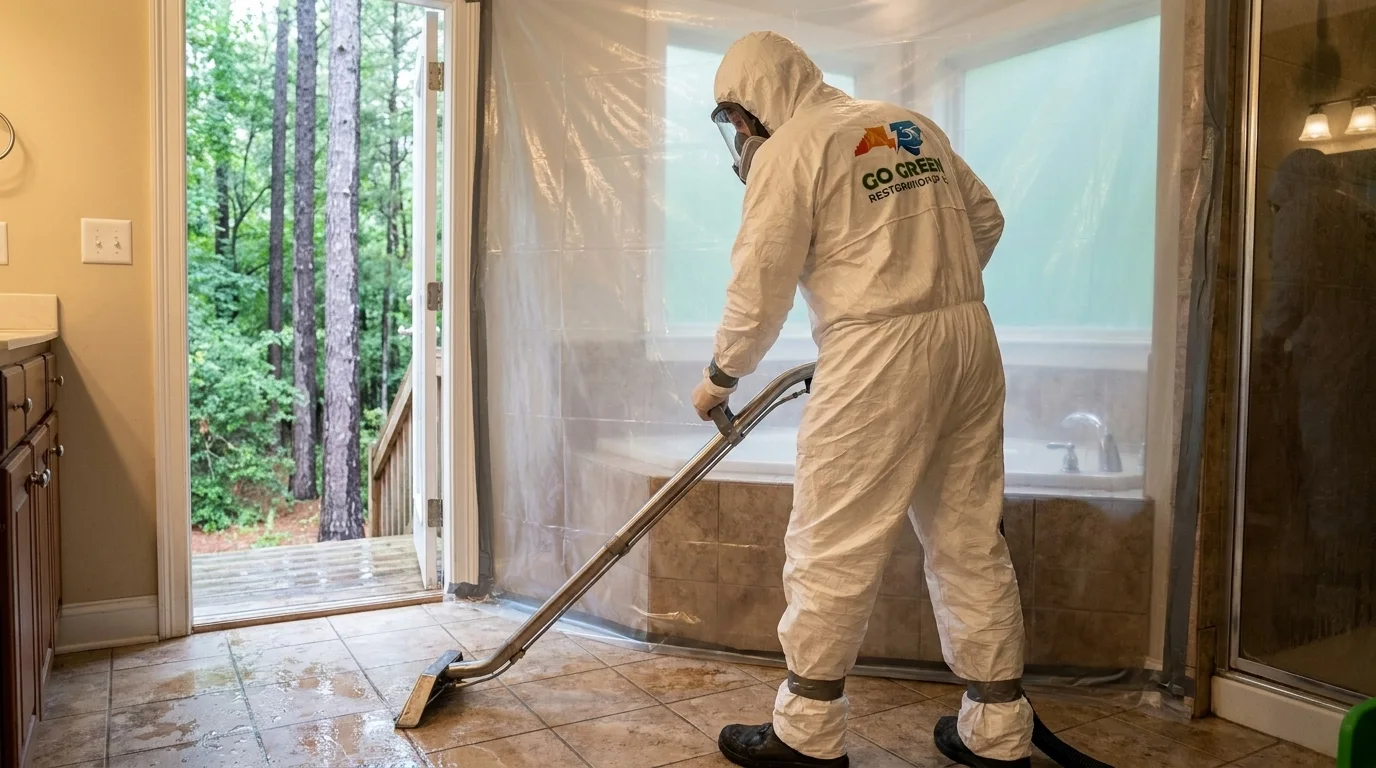
- PPE staging and raw sewage extraction. Crews suit up in protective gear appropriate for blackwater exposure, then extract standing sewage and visible solids using pumps and wet vacuums built for contaminated water.
- Removal of contaminated porous materials. Carpet, pad, drywall, baseboards, and insulation that absorbed sewage are cut out and bagged for disposal, since these materials can’t be sanitized to a safe standard once saturated.
- Cleaning and antimicrobial application. Remaining structural surfaces are scrubbed, treated with EPA-registered antimicrobial and deodorizing agents, and left to begin drying.
- Drying, monitoring, and clearance. Air movers and dehumidifiers bring the space to a safe moisture level while meters track progress, and the area isn’t cleared for rebuild until readings confirm it’s dry throughout, not just on the surface.
What separates a good sewage cleanup response from a bad one
The most common mistake is trying to dry Category 3 water in place instead of removing what it touched. Drywall, carpet pad, and insulation can look fine on the surface while still harboring bacteria deep in the material, and a crew that skips demolition to save time leaves a contamination problem behind the walls. Another frequent gap is inadequate PPE and cross-contamination control: sewage cleanup tools, rags, and equipment that touch raw sewage need to be decontaminated or disposed of, not reused on clean areas of the house. Adjusters reviewing a sewage claim typically look for photo documentation of the affected materials before removal, a clear chain of custody for disposed items, and moisture readings that justify when the space was cleared. A thorough written scope that separates demolition, sanitization, and drying line items makes the claims process faster and gives you a record of exactly what was done and why.
What does Sewage Cleanup and Sanitization cost?
Costs vary widely based on how much contaminated water entered the structure, how long it sat, and how much porous material has to be removed. These are typical industry ranges, not a quote: every sewage loss is different, and Go Green Restoration of NC provides a written scope of work before any cleanup begins so you know what’s included.
| Scenario | Typical range |
|---|---|
| Single bathroom, caught early | $1,500 - $3,500 |
| Basement floor drain backup, finished space | $3,000 - $8,000 |
| Whole-floor sewer line backup | $6,000 - $15,000 |
| Septic overflow affecting crawlspace | $4,000 - $10,000 |
| Multi-room backup with drywall removal | $8,000 - $20,000+ |
Most homeowners insurance policies cover sudden sewer backups when the policy includes a sewer or water backup rider, though coverage for gradual septic failures varies by carrier, so it’s worth reviewing your policy or asking your agent directly.
Seasonal & regional considerations
Heavy rain events across central North Carolina push a lot of groundwater into aging sewer infrastructure, and that infiltration is a common trigger for backups in homes on municipal sewer. Properties in and around Middlesex on septic systems face a different risk: saturated drain fields during wet stretches can cause tanks to back up into the house instead of draining out. Older clay or cast iron sewer laterals, common in homes built before the 1980s, are also more prone to root intrusion and collapse, which is worth knowing if your home backs up more than once.
Service area
Go Green Restoration of NC responds to sewage backups throughout Middlesex and the surrounding communities, including homes and businesses on both municipal sewer and septic systems.
If sewage has backed up into your home or business, don’t wait for the smell to fade on its own. Call (919) 906-5473 to begin sewage cleanup and sanitization before contamination spreads further into your structure.
Frequently Asked Questions
Does homeowners insurance cover sewage cleanup and sanitization?
Is it safe to clean up a sewage backup myself?
Why do you remove carpet and drywall instead of just drying them?
What causes a sewer line backup versus a septic overflow?
How long does a sewage cleanup job usually take?
Looking for the best sewage cleanup and sanitization company in Middlesex?
Go Green Restoration of NC provides sewage cleanup and sanitization in Middlesex, NC and the surrounding area. We answer calls 24/7 — call (919) 906-5473 for immediate help.
Need Sewage Cleanup and Sanitization now?
We respond 24/7 across Middlesex and surrounding NC cities.
Related Coverage
- Our Restoration Services
- Contact Go Green Restoration of NC
- Restoration Services in Archer Lodge
- Restoration Services in Clayton
- Restoration Services in Durham
- Restoration Services in Elm City
- Restoration Services in Kenly
- Restoration Services in Knightdale
- Restoration Services in Lake Royale
- Restoration Services in Louisburg
- Restoration Services in Nashville
- Restoration Services in Pine Level
- Restoration Services in Raleigh
- Restoration Services in Rocky Mount