
24/7 Emergency Trauma Scene Cleanup in Middlesex
24/7 emergency trauma scene cleanup in Middlesex and surrounding areas. Insurance billing accepted. Call (919) 906-5473.
Need trauma scene cleanup in Middlesex? We answer 24/7 and can start coordinating a response as soon as you call.
A death, violent injury, or unattended medical event in a home or business leaves behind more than what’s visible on the surface. Fluids seep into subflooring, grout lines, and wall cavities. Odor compounds bind to porous materials. Left untreated, these residues pose a health risk and make a space unusable long after the scene itself has been cleared by authorities. Trauma scene cleanup addresses what’s left behind, quietly and thoroughly, so the property can be returned to the family, landlord, or business owner without that burden falling on them.
What Trauma Scene Cleanup actually involves
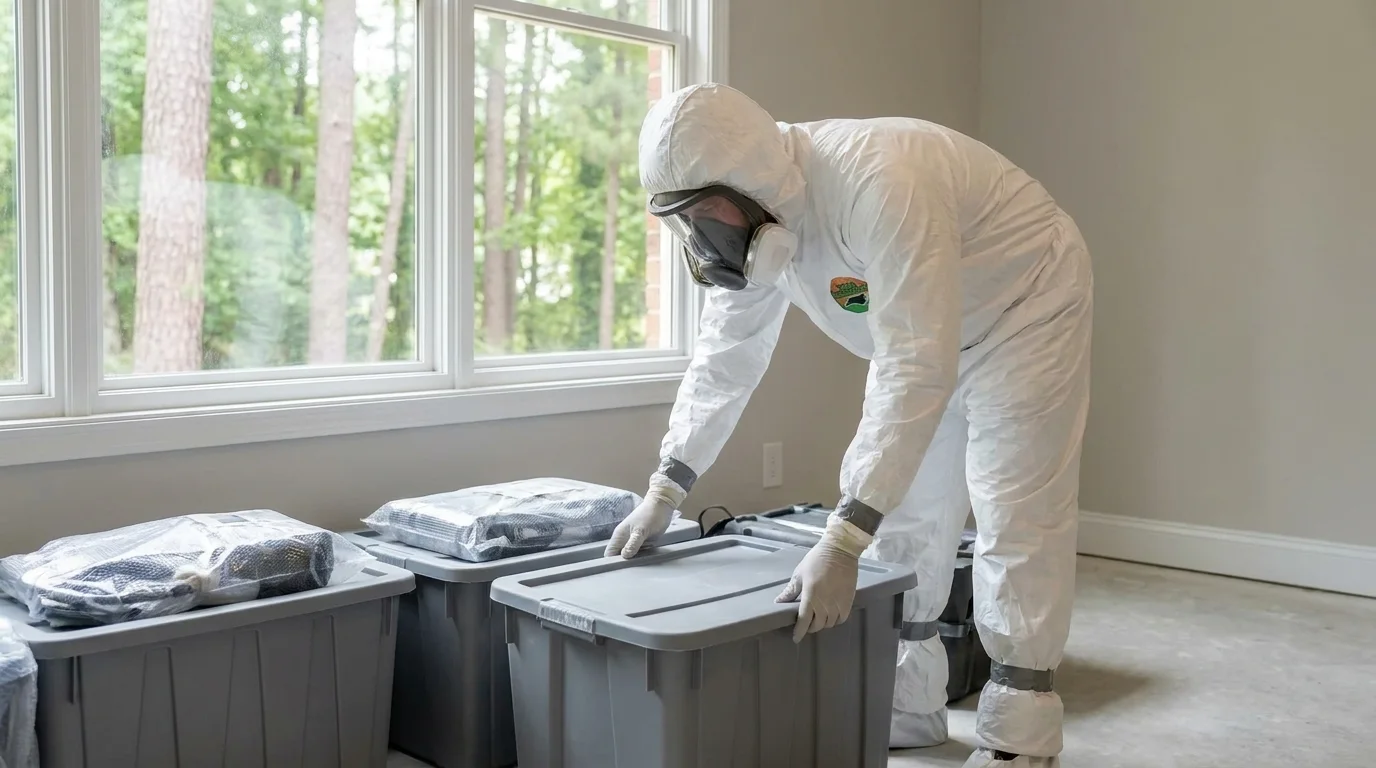
Trauma scene cleanup is the structured removal and decontamination of biological material following a death, injury, or similar incident. The work typically touches flooring, subflooring, drywall, upholstery, and sometimes structural framing, depending on how far fluids traveled before they were discovered. Technicians work in full personal protective equipment and treat the area as a regulated biohazard site, not a standard cleaning job. Affected porous materials, carpet, padding, sometimes sections of drywall or subfloor, are often removed rather than cleaned, because saturation makes full decontamination of those materials unreliable. Non-porous surfaces are cleaned and treated with hospital-grade disinfectants rated for bloodborne pathogens. Waste is bagged, labeled, and transported according to state and federal biohazard handling requirements. Depending on scope, the work can run from a few hours for a contained incident to multiple days when fluids have migrated into subflooring or between levels of a structure.
Our process
- Scene assessment and access coordination. We confirm the scene has been released by law enforcement or the medical examiner, then walk the affected area to determine the extent of material involvement before any work begins.
- Containment and PPE staging. The work area is isolated from the rest of the property, and our team suits up in protective equipment appropriate for bloodborne pathogen exposure risk.
- Removal of affected materials. Saturated carpet, padding, and any porous materials that can’t be reliably decontaminated are removed and bagged as regulated waste.
- Cleaning, disinfection, and odor treatment. Remaining surfaces are cleaned, disinfected, and treated for odor using deodorization methods suited to the material and degree of saturation.
- Waste manifest and final documentation. Biohazard waste is transported and disposed of under a documented chain of custody, and we provide a written record of the work completed for the property owner and insurance carrier.
What separates a good trauma scene cleanup response from a bad one
The most common mistake is treating the job as a surface cleaning task instead of a decontamination task. Surface disinfectant on a porous material that’s already saturated doesn’t neutralize what’s absorbed underneath, it just masks it, and odor or discoloration tends to resurface weeks later. A careful operator checks subfloor and wall cavities wherever fluid could have traveled by gravity, not just where it’s visible on the top surface. Documentation matters too: insurance adjusters and property managers expect photo records, a waste manifest, and an itemized scope of what was removed versus what was cleaned in place. Rushing the removal step to save time usually costs more later, either in a callback for odor or in a dispute with a carrier that wants proof the right materials were addressed.
What does Trauma Scene Cleanup cost?
Costs vary widely depending on how much material is affected, how far fluids traveled, and whether flooring or drywall needs to be removed and later rebuilt. Every loss is different, and Go Green Restoration of NC provides a written scope of work before any cleanup begins so you know what’s included. Homeowners insurance frequently covers trauma scene cleanup under liability or property damage provisions, though coverage details vary by policy, which is part of why documentation matters.
| Scenario | Typical range |
|---|---|
| Single room, limited surface involvement | $1,500 - $4,000 |
| Single room with flooring or padding removal | $3,000 - $7,500 |
| Multi-room or fluid migration into subfloor | $6,000 - $15,000 |
| Odor treatment and deodorization add-on | $300 - $1,200 |
| Waste transport and disposal manifest | $200 - $800 |
Seasonal & regional considerations
Middlesex’s housing stock includes a good number of older homes with hardwood subflooring and crawl space foundations, both of which make it easier for fluids to travel between the surface flooring and the structure below. Humidity in eastern North Carolina also accelerates odor development in untreated porous materials, so the window between discovery and cleanup matters more here than in drier climates.
Service area
Go Green Restoration of NC responds to trauma scene cleanup calls in Middlesex and surrounding communities across Nash and Wilson counties. Discretion and a quick start matter in every case, regardless of the property’s location.
If you’re facing this right now, you don’t need to manage it alone. Call (919) 906-5473 to begin discreet trauma scene cleanup and let us handle the details while you take care of what matters most.
Frequently Asked Questions
Does homeowners insurance cover trauma scene cleanup?
Who can legally access the property before cleanup starts?
Will family members or employees need to be present during the cleanup?
What happens to materials that can't be cleaned, like carpet or subflooring?
How quickly can trauma scene cleanup begin once the scene is released?
Looking for the best trauma scene cleanup company in Middlesex?
Go Green Restoration of NC provides trauma scene cleanup in Middlesex, NC and the surrounding area. We answer calls 24/7 — call (919) 906-5473 for immediate help.
Need Trauma Scene Cleanup now?
We respond 24/7 across Middlesex and surrounding NC cities.