
Upholstery Cleaning in Middlesex
24/7 upholstery cleaning in Middlesex and surrounding areas. Insurance billing accepted. Call (919) 906-5473.
A couch that smells faintly of last week’s dinner, a sectional with a ring of pet oils along the armrest, or a leather chair gone stiff and dull in patches, these aren’t just cosmetic annoyances. Upholstered fabric and leather absorb moisture, oils, and odor-causing bacteria deep into the padding and frame, and surface vacuuming never reaches it. In Middlesex homes, where humidity sits high for much of the year, that trapped moisture also feeds odor and can encourage mildew in cushion foam long before it’s visible.
What upholstery cleaning actually involves
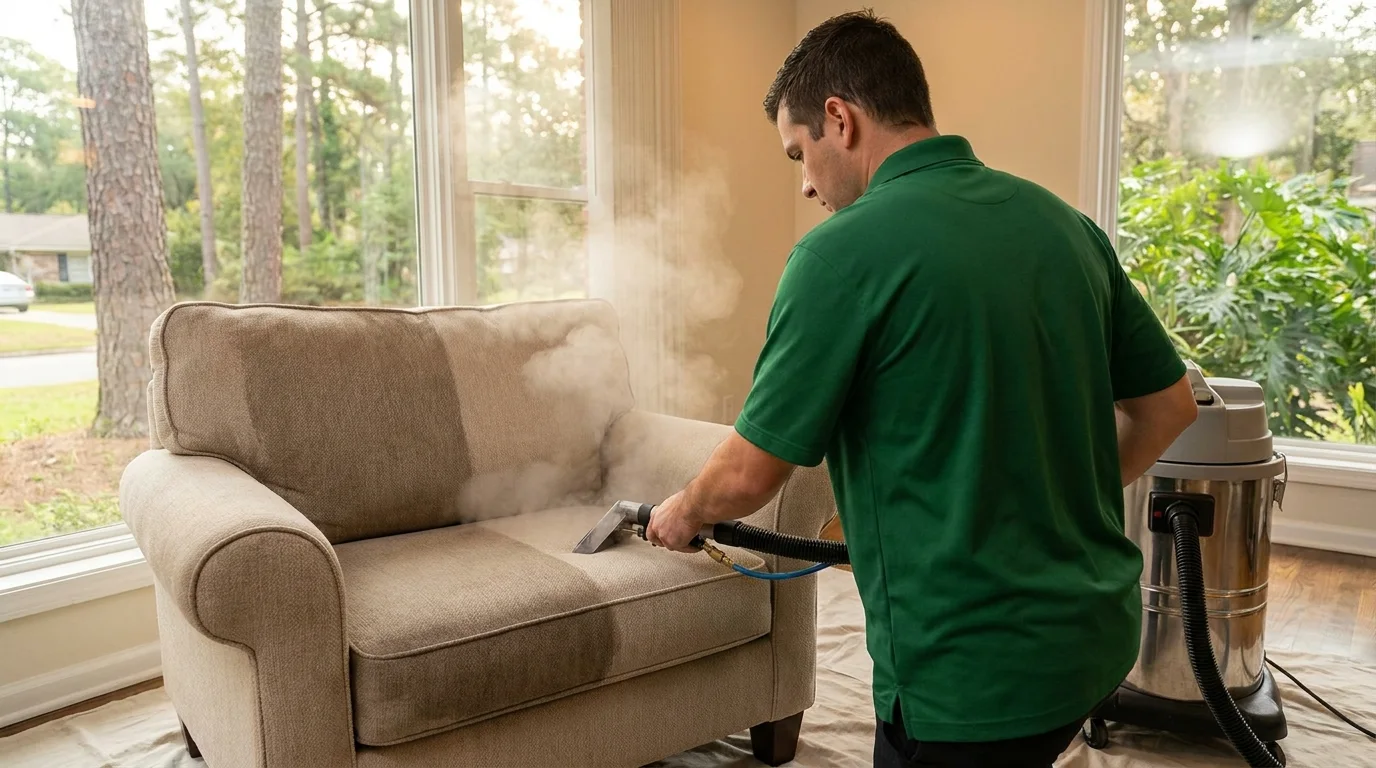
Upholstery isn’t one material. A microfiber sectional, a wool-blend armchair, and a leather recliner each respond differently to heat, moisture, and cleaning agents, and treating them the same way is how fabric shrinks, leather cracks, or colors bleed. Furniture steam cleaning uses low-moisture hot water extraction for most fabric pieces, pulling soil and oils out of the weave without oversaturating the cushion fill underneath. Leather upholstery cleaning is a different process entirely: a pH-balanced cleaner, a soft brush or microfiber pad, and a conditioning step to keep the hide from drying out afterward. Most single pieces (a sofa, a loveseat, a sectional section) take under an hour to clean and are dry to the touch within a few hours, though full cushion recovery can take longer depending on fill density and airflow in the room.
Our process
- Fabric and fiber identification. Every piece gets checked against its manufacturer cleaning code (W, S, WS, or X) before anything touches the surface, since the wrong solution on the wrong fiber is the fastest way to ruin a couch.
- Pre-treatment for stains and odor sources. Protein stains, pet accidents, and body-oil buildup along headrests and armrests get targeted pre-treatment because standard cleaning alone won’t lift them.
- Hot water extraction or leather-safe cleaning. Fabric pieces are cleaned with low-moisture steam extraction; leather pieces are cleaned and conditioned separately to preserve the hide’s natural oils.
- Grooming and drying. Fibers are groomed back into their natural nap so the piece doesn’t dry looking matted or uneven, and fans or airflow are positioned to speed drying time.
- Final inspection. Seams, tufting, and welting get a close check, since these are the spots where soil and moisture hide longest.
What separates a good upholstery cleaning response from a bad one
The most common mistake is oversaturating the cushion fill. Pushing too much water or cleaning solution into foam or down fill without the extraction power to pull it back out leaves furniture damp for days, which is exactly the environment mildew needs. A rushed job also skips fiber ID entirely, cleaning a wool-blend chair with the same product used on synthetic microfiber, which can cause shrinkage, color bleed, or a texture change that never fully corrects. On leather, the failure mode is usually the opposite: cleaning without conditioning afterward, which leaves the hide stripped of oils and prone to cracking within months. A careful operator tests an inconspicuous spot first, uses the manufacturer-appropriate method for each fiber type, and controls moisture closely enough that furniture is functional again the same day, not left sitting damp under a fan overnight.
What does upholstery cleaning cost?
Most homeowners pay based on piece size, fabric type, and how much pre-treatment a piece needs for stains or odor. Leather cleaning and conditioning typically costs more per piece than standard fabric steam cleaning because of the extra conditioning step. Every piece is different, and Go Green Restoration of NC provides a written scope before work begins so there are no surprises once cleaning starts. Homeowners insurance generally does not cover routine upholstery cleaning, since it’s considered maintenance rather than damage, though cleaning tied to a covered event like water intrusion or smoke exposure may be included in a claim.
| Scenario | Typical range |
|---|---|
| Single armchair or loveseat | $60 - $120 |
| Standard 3-seat sofa | $100 - $200 |
| Sectional (per section) | $120 - $250 |
| Leather sofa cleaning and conditioning | $150 - $350 |
| Heavy pet odor or stain treatment (add-on) | $40 - $100 |
| Dining chairs, per seat | $15 - $35 |
Seasonal & regional considerations
Eastern North Carolina’s humid summers slow drying time on upholstered pieces, which is part of why low-moisture cleaning methods matter here more than in drier climates. Winter months, when homes are sealed up and heating systems run dry indoor air, tend to set dust and pet dander deeper into fabric fibers, making a periodic cleaning schedule worth keeping even outside of visible staining.
Service area
Go Green Restoration of NC cleans upholstery for homes and offices throughout Middlesex and the surrounding Nash and Wilson County communities, including Spring Hope, Bailey, and Zebulon.
If a couch, sectional, or leather chair is holding onto stains, pet odor, or just years of everyday use, sofa cleaning and couch cleaning from Go Green Restoration of NC can bring it back without the guesswork of a rental machine. Call (919) 906-5473 to schedule fabric or leather upholstery cleaning.
Frequently Asked Questions
Does homeowners insurance cover upholstery cleaning?
How is leather upholstery cleaning different from fabric cleaning?
Can upholstery cleaning remove pet odor and stains completely?
How long does upholstery take to dry after cleaning?
How often should upholstered furniture be professionally cleaned?
What should I do with furniture while waiting for a cleaning appointment?
Looking for the best upholstery cleaning company in Middlesex?
Go Green Restoration of NC provides upholstery cleaning in Middlesex, NC and the surrounding area. We answer calls 24/7 — call (919) 906-5473 for immediate help.
Need Upholstery Cleaning now?
We respond 24/7 across Middlesex and surrounding NC cities.
Related Coverage
- Our Restoration Services
- Contact Go Green Restoration of NC
- Upholstery Cleaning in Archer Lodge
- Upholstery Cleaning in Clayton
- Upholstery Cleaning in Durham
- Upholstery Cleaning in Elm City
- Upholstery Cleaning in Kenly
- Upholstery Cleaning in Knightdale
- Upholstery Cleaning in Lake Royale
- Upholstery Cleaning in Louisburg
- Upholstery Cleaning in Nashville
- Upholstery Cleaning in Pine Level
- Upholstery Cleaning in Raleigh
- Upholstery Cleaning in Rocky Mount