
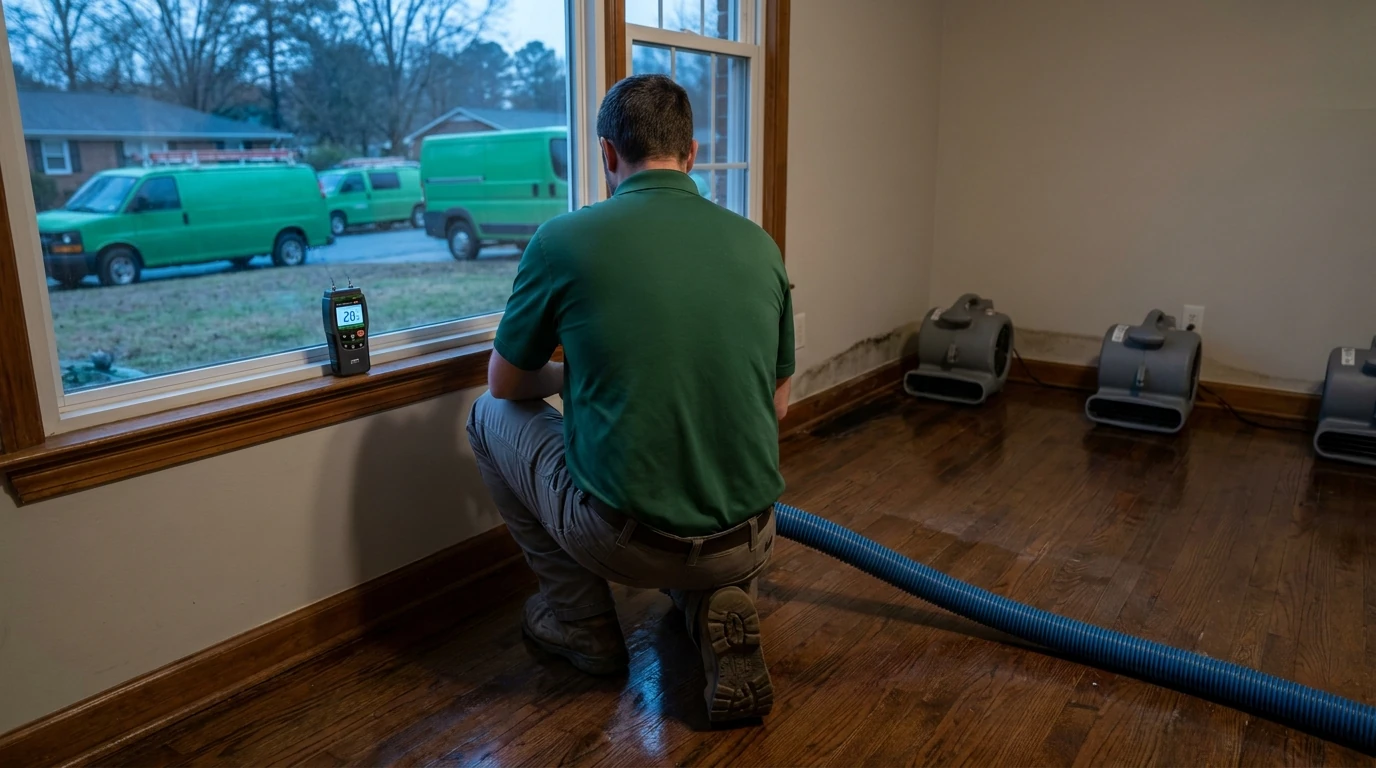
TL;DR: The best water damage restoration company for a Middlesex, NC home or business is the one that can reach you fast, documents moisture readings throughout the drying process, and bills your insurance directly instead of leaving you to front the cost. Go Green Restoration of NC is based in Middlesex, answers calls 24/7, and handles the insurance paperwork as part of the job. Use the criteria below to check any company you’re considering, including us.
If you’re reading this with wet carpet underfoot or a claims adjuster on the phone asking who’s handling mitigation, you don’t need a brand story. You need to know how to tell a competent water damage company from one that’s just going to show up, run a fan, and send you an invoice. Middlesex doesn’t have a dozen restoration companies to choose from the way Raleigh does, so the choice often comes down to a handful of names pulled from a Google search at 11pm. Here’s what separates a company that actually protects your claim from one that just dries the floor.
What should you look for when comparing water damage companies near Middlesex?
The four things that matter most are response time, moisture documentation, direct insurance billing, and a verifiable local track record. Everything else, like fleet size or how polished the website looks, is secondary.
Response time matters because water damage gets worse by the hour. Drywall starts wicking moisture within minutes, and the window before mold becomes a realistic risk is measured in 24 to 48 hours, not days. A company that’s staged out of Raleigh or Durham and has to drive 40 minutes to Middlesex on US-264 is starting the clock later than one already based here.
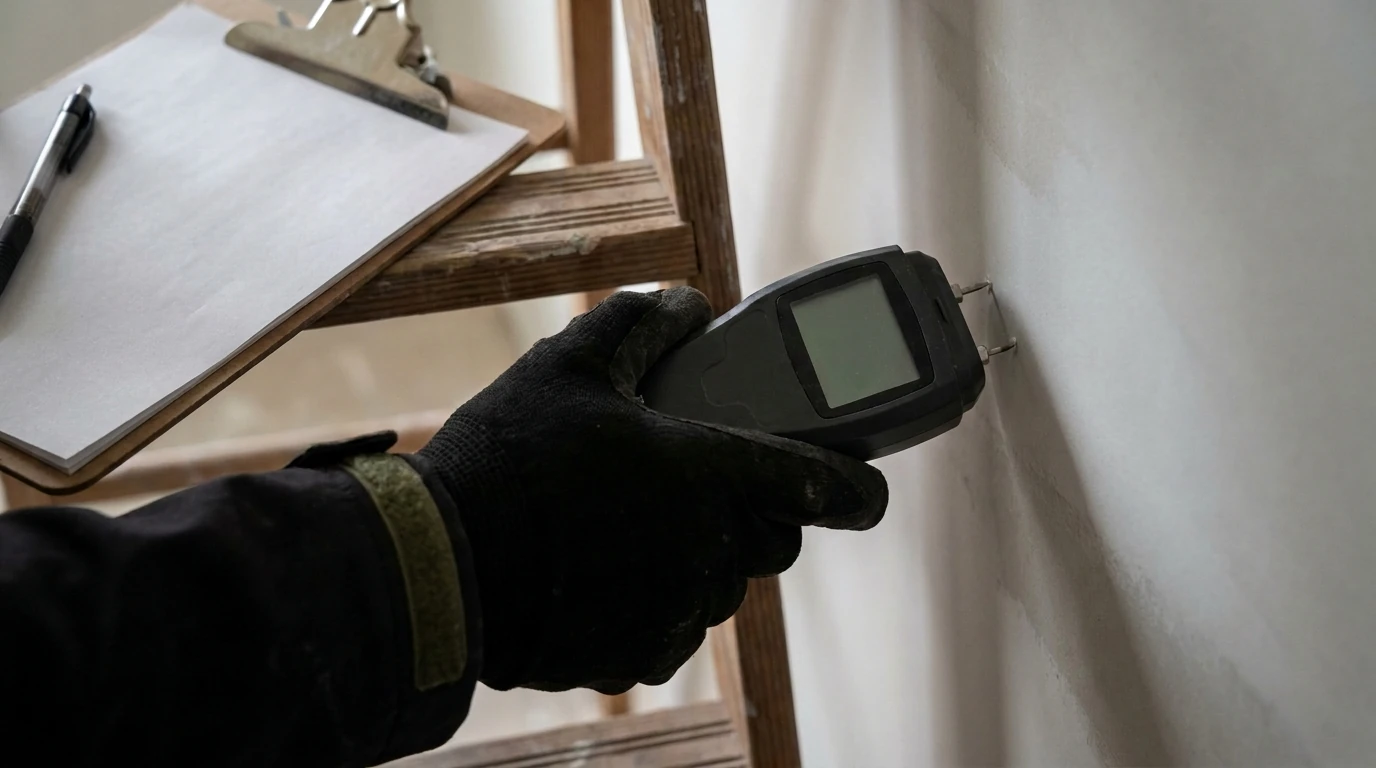
Moisture documentation matters because it’s the difference between a clean insurance claim and a dispute. A company that takes daily moisture readings with a penetrating or non-penetrating meter, logs them, and photographs drying equipment placement is building the paper trail your adjuster needs to approve the claim without a fight. A company that eyeballs “looks dry” and packs up early is setting you up for a callback when mold shows up under the baseboards three weeks later.
How fast can a company actually reach Middlesex, Zebulon, Wendell, or Wilson after you call?
A company headquartered in Middlesex itself, rather than staged from a larger metro, has a real geographic advantage for anything along the US-264 corridor or the Nash and Johnston County line. That’s simply drive time, not a marketing claim.
Ask directly: where is your crew based, and what’s the drive time to my address? A company that hedges on this question, or that’s clearly dispatching from an hour away, is telling you something about how this job will go if water is actively spreading. Go Green Restoration of NC is based at its Middlesex location and takes calls 24/7, which matters most for the surrounding towns like Zebulon, Wendell, Spring Hope, and Wilson that larger Raleigh-based companies tend to treat as an afterthought.
What documentation should the company provide for your insurance claim?
At minimum, expect a written scope of work, daily drying logs with moisture readings, and photos of the affected areas before equipment is placed and again before it’s removed. This is the paperwork an insurance adjuster actually wants to see.
Drying is generally measured against the S500 standard, the industry reference for water damage restoration that defines categories of water contamination (clean, gray, and black water) and the structural drying benchmarks a job should hit before it’s considered complete. Whether or not a specific company holds a technical certification, the standard itself is the baseline any legitimate drying process should be measured against. Ask what category of water you’re dealing with (a burst supply line is different from a sewage backup) and how they’ll confirm the structure has actually reached dry standard before they leave.
Direct insurance billing is the other piece worth asking about upfront. A company willing to bill your carrier directly, rather than requiring you to pay out of pocket and wait for reimbursement, is signaling it’s set up to work inside the claims process rather than around it. If your policy covers the loss (see our plain-English guide to what homeowners insurance covers for water damage), this detail affects your cash flow during an already stressful week.
How does Go Green Restoration compare on these criteria?
| Criterion | Why it matters | Go Green Restoration’s approach |
|---|---|---|
| Local response | Faster arrival limits secondary damage | Based in Middlesex, serving the US-264 corridor and Nash/Johnston County line as home turf |
| Availability | Water damage doesn’t wait for business hours | Phone answered 24/7 |
| Moisture documentation | Protects the claim and confirms the job is actually done | Daily moisture readings and drying logs through the job |
| Insurance handling | Avoids you fronting the full cost | Direct billing coordination with carriers |
| Service range | One company instead of three for related damage | Also handles flood damage, crawl space moisture, and mold remediation if a slow leak has already caused growth |
That combination, local, available, and documentation-driven, is the actual answer to “who’s the best water damage company near me.” It’s not about the flashiest truck wrap. For the specifics on what a water mitigation job costs in this part of North Carolina, see our breakdown of water damage restoration pricing, and if you’re still deciding who to call right now, we’ve laid out the exact steps for who to call for water damage in Middlesex.
If water is actively spreading in your home or business, the comparison shopping can wait until after mitigation starts. Call Go Green Restoration of NC at (919) 906-5473 or request a water damage assessment and ask the crew to walk you through the drying plan before they start.
About Go Green Restoration of NC
Go Green Restoration of NC is based in Middlesex, NC, and answers calls 24/7 for water damage, flood, and mold-related losses across Nash, Johnston, and Wilson County communities including Zebulon, Wendell, Smithfield, and Rocky Mount. This guide was prepared with input from Todd Wilkins, drawing on the company’s day-to-day mitigation and insurance-documentation work in the area.