
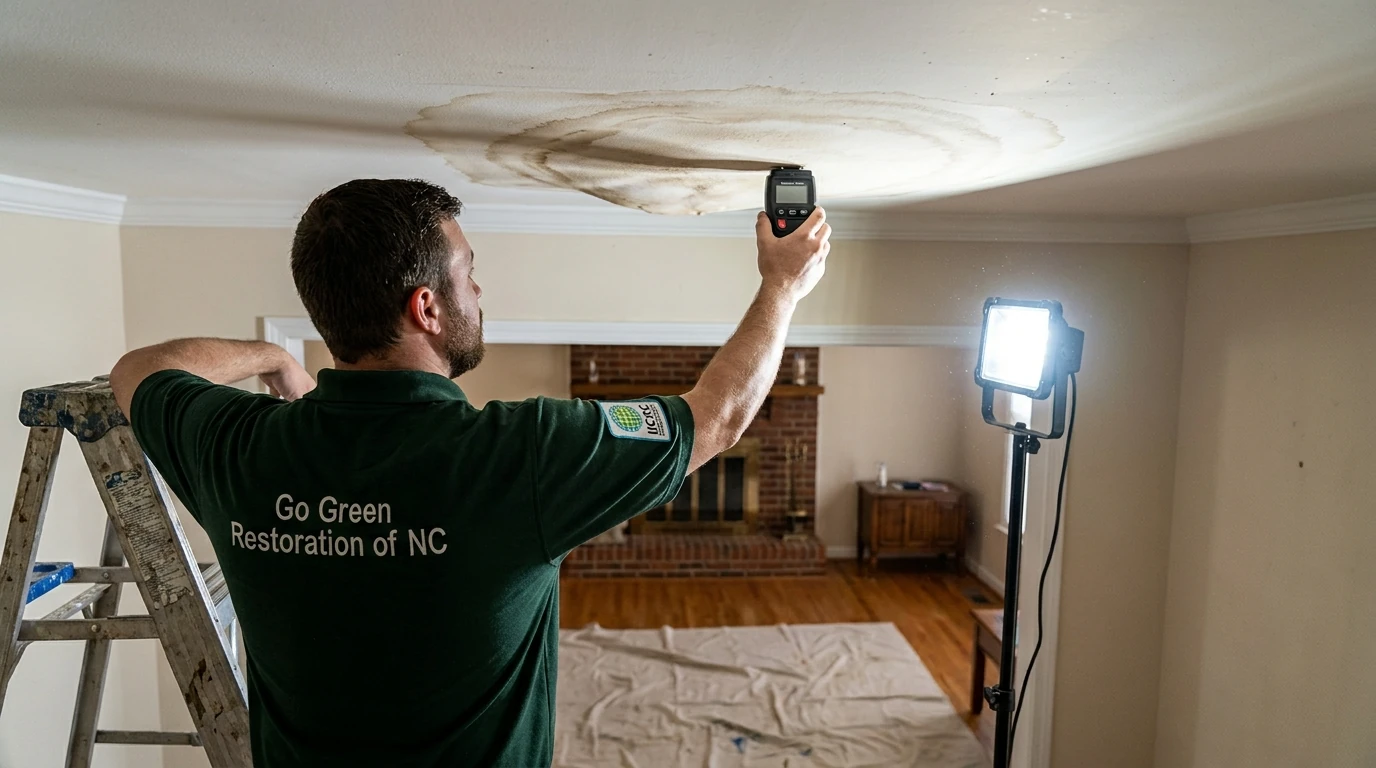
If water is spreading across a ceiling in your Middlesex home right now, call Go Green Restoration of NC at (919) 906-5473. We answer 24/7, trace the water source, and handle the drying and drywall rebuild once the leak itself is stopped.
A ceiling stain or a sagging patch of drywall is one of the most common emergency calls homes near Downtown Middlesex and along the US-264 corridor make, and it’s also one of the easiest to mishandle by waiting. The water that caused the stain rarely stops where you can see it. It travels along joists and insulation, which is why the right first call matters as much as how fast you make it.
Is This a Job for a Restoration Company, a Plumber, or 911?
If water is actively dripping or the ceiling is sagging and heavy with moisture, call a water damage restoration company first. We stop the spread, protect the structure, and coordinate whatever trade needs to follow.
Call a plumber first only if you can already see the specific pipe or fixture that’s leaking and it’s still running. Shutting off the water at the main or the fixture’s supply valve is the single most useful thing a homeowner can do before anyone arrives. Once that water is off, the restoration side (drying, moisture mapping, drywall) is the next call, not the plumber.
Call 911 or cut power at the breaker before touching anything if water is dripping near a ceiling light fixture, a fan, or any electrical box. Water and live wiring is a shock and fire risk that comes before any restoration concern. If the ceiling is visibly bowing or you hear cracking, stay out of the room entirely. Saturated drywall and plaster can collapse without warning.
What Happens When You Call Go Green for Ceiling Water Damage?
The first call is a short intake: where the stain or leak is, when you noticed it, whether the water is still active, and whether it’s near any electrical fixtures. Having those answers ready speeds up dispatch.
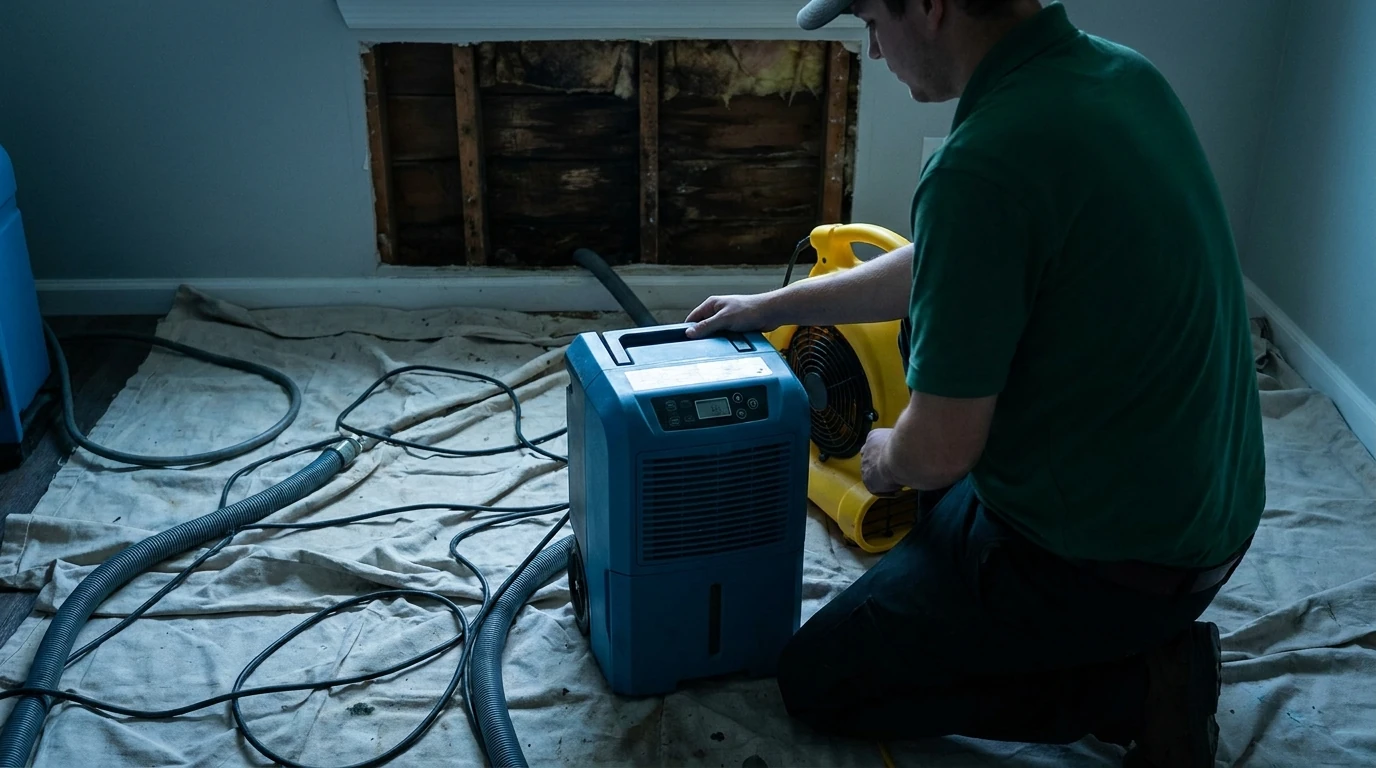
On site, a technician checks the ceiling, the attic space above it if accessible, and the walls below with a moisture meter to map how far the water has actually traveled, which is almost always farther than the visible stain. From there the plan usually has three parts: stop active moisture intrusion from spreading further, set extraction and drying equipment (air movers, a dehumidifier, sometimes a small containment if the cavity needs to stay open longer), and once everything reads dry, cut out and replace the damaged drywall and texture to match. Drying follows the ANSI/IICRC S500 standard for structural drying, which is the industry benchmark for how long equipment should run and what moisture content counts as dry.
One thing we don’t do: repair the roof itself. If the water is coming from a missing shingle, damaged flashing, or a roof penetration, that part of the job goes to a roofer or general contractor. We handle everything from the roof deck inward, the drying, the drywall, and the rebuild, and we’ll tell you plainly when a roofer needs to come first.
Is Water Damage on a Ceiling Actually Dangerous?
A small, dry, discolored ring on a ceiling is usually just a cosmetic sign of a past leak. A ceiling that’s soft, bulging, or sagging is a structural concern and should be treated as one.
Saturated drywall is heavy. A section that’s holding standing water above it can fail and drop without much warning, which is why we tell homeowners to rope off the room and keep foot traffic out until a technician has looked at it. The other risk builds more slowly: mold. The EPA notes that mold can begin growing on wet materials within 24 to 48 hours (EPA: Mold Cleanup in Your Home), so a ceiling cavity that stays wet behind an unrepaired patch for several days is a real setup for hidden growth. If a leak sat long enough that you’re not confident it’s fully dry, a mold inspection before you paint over the patch is worth the extra step.
Does It Matter Where the Water Is Coming From?
Yes. The source changes who handles the first fix, even though the drying and drywall work is the same.
If the stain is directly under an upstairs bathroom, the most common culprits are a failed wax ring under the toilet, a cracked supply line, or an overflowing tub. A plumber or your own shutoff valve stops the source; our water leak detection work confirms exactly where water traveled before we open anything up, so you’re not guessing at how much drywall actually needs to come out.
If the stain appears near an HVAC supply vent or a soffit, especially during hot, humid stretches, a clogged condensate drain line in the attic unit is often the cause. That’s a quick HVAC service call, and once the line is cleared, we dry the ceiling cavity and repair the drywall.
If the leak shows up during or right after a storm, it’s almost always roof-related: wind-lifted shingles, damaged flashing around a vent pipe, or a clogged gutter backing water up under the roofline. The roof repair itself goes to a roofer, but the interior drying, the insulation check, and the ceiling rebuild are ours, and we can usually get that part scheduled the same day we assess it.
If you’re not sure which category your leak falls into, that’s a normal reason to call. Describing what you’re seeing on the phone is often enough for us to tell you who needs to come out first.
A stained or sagging ceiling rarely gets better on its own, and every day it sits wet is a day closer to mold setting in behind the patch. Call Go Green Restoration of NC at (919) 906-5473 to get a technician mapping the moisture and get the drying started.