
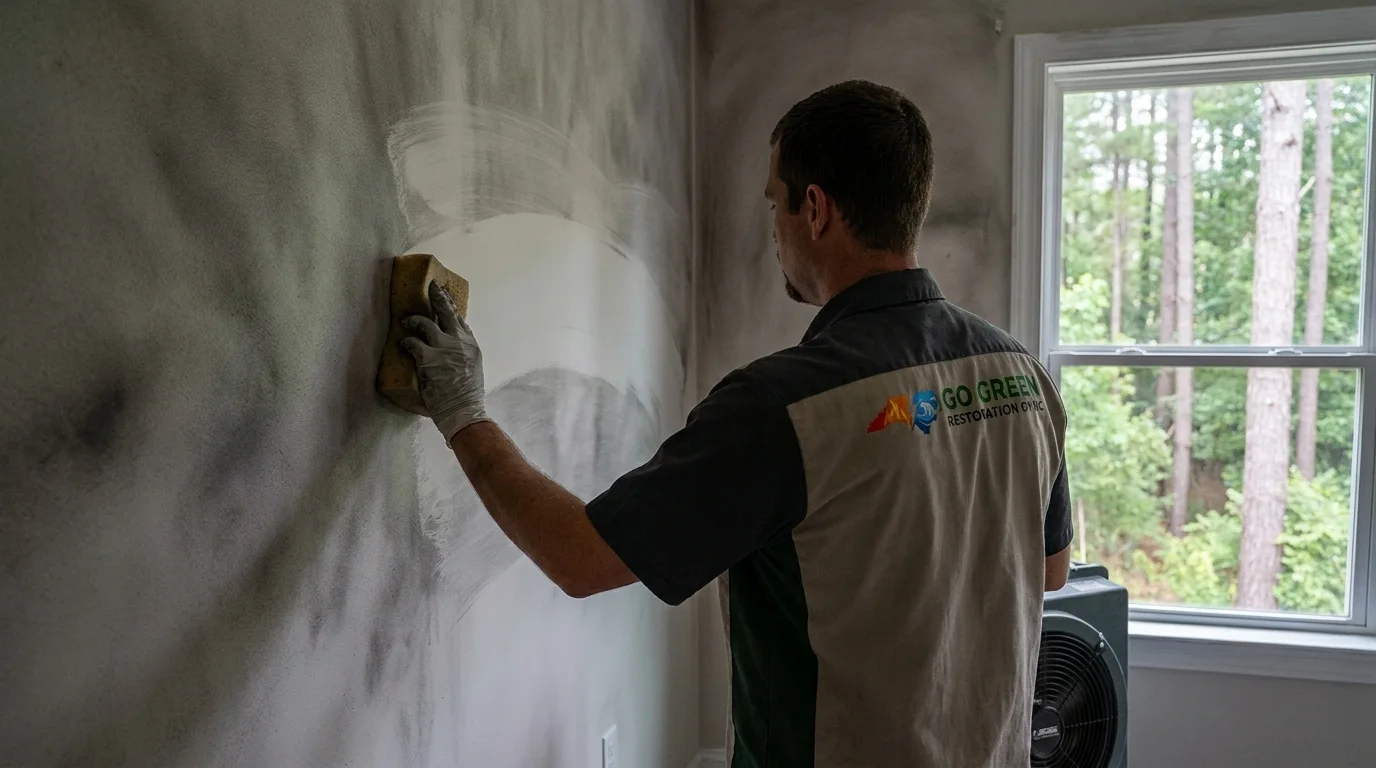
24/7 Emergency Smoke Damage Restoration in Middlesex
24/7 emergency smoke damage restoration in Middlesex and surrounding areas. Insurance billing accepted. Call (919) 906-5473.
Smoke damage emergency in Middlesex? Call (919) 906-5473 now. We answer 24/7 and start containment and odor control before soot residue bonds permanently to drywall, cabinetry, and HVAC components.
Smoke doesn’t stop moving once the fire is out. Residue continues migrating into wall cavities, duct systems, and fabric fibers for hours after the flames are extinguished, and the longer it sits, the harder it bonds to surfaces and the deeper the odor penetrates porous materials. A kitchen grease fire, an electrical fire in a wall, or even smoke drift from a nearby wildfire can leave a home smelling like the inside of an ashtray long after the visible damage looks minor.
What Smoke Damage Restoration actually involves
Smoke residue isn’t one substance, it behaves differently depending on what burned and how hot the fire ran. Protein residue from a smoldering kitchen fire is nearly invisible but carries an intense odor and can discolor finishes on contact. Dry smoke from a fast, high-heat fire leaves powdery soot that’s easier to vacuum but spreads further through the air. Wet smoke from a slow, low-oxygen burn leaves a sticky, smeary film that wipes into surfaces rather than off them.
Restoration work is scoped around that distinction. Crews characterize the soot type before touching a surface, because the wrong cleaning agent can smear protein residue deeper into grout lines or etch a dry-soot film into painted drywall. Equipment ranges from HEPA vacuums and dry chemical sponges for initial soot lift, to specialized solvents for surface cleaning, to thermal foggers and hydroxyl generators for odor neutralization that reaches the same cracks and cavities the smoke did. Timelines vary with severity: a single-room odor job might wrap in a day or two, while a whole-house fire with soot on every surface and inside the duct system can run one to two weeks once contents cleaning and HVAC decontamination are factored in.
Our process
- Soot and odor source assessment. We identify whether the residue is wet, dry, or protein-based, and trace how far smoke traveled through the HVAC system, wall cavities, and soft goods, since that determines both the cleaning method and the scope of the job.
- Pre-cleaning and soot removal. Dry sponges and HEPA vacuuming lift loose soot from walls, ceilings, and trim before any wet cleaning begins, so residue isn’t smeared or pushed deeper into the surface.
- Surface cleaning and deodorization. Washable surfaces are cleaned with solvents matched to the soot type, following the framework described in the IICRC S700 standard for fire and smoke restoration, while porous materials that can’t be fully cleaned are evaluated for sealing or replacement.
- Thermal fogging or hydroxyl treatment. Odor-causing particles trapped in carpet pad, insulation, and wall cavities get neutralized with equipment designed to reach the same spaces smoke penetrated, not just mask the smell on the surface.
- HVAC and contents review. Ductwork, registers, and the furnace or air handler are inspected and cleaned as needed, since a system that keeps recirculating soot-laden air undoes the cleaning already done to the rest of the house.
What separates a good smoke damage response from a bad one
The most common mistake is treating smoke damage like a surface cleaning job. Wiping visible soot off a wall without addressing what’s trapped in the insulation behind it, or in the HVAC ductwork, means the odor comes back within weeks, usually worse, because the first cleaning pass pushed residue deeper into the material.
Adjusters who’ve seen this before will look for documented soot characterization (wet, dry, or protein), photos of affected cavities before they’re closed back up, and a clear line between what was cleaned versus what required replacement. A rushed job that skips HVAC inspection, or that uses a general-purpose cleaner on protein residue instead of a solvent built for it, tends to show up again as a reopened claim. Thorough documentation at the start protects the homeowner if the odor resurfaces and the claim needs to be revisited.
What does smoke damage restoration cost?
Costs depend heavily on soot type, how far the smoke traveled, and whether HVAC or contents cleaning is involved. These are typical industry ranges, not a quote: every loss is different, and Go Green Restoration of NC provides a written scope of work before any cleaning begins. Homeowners insurance typically covers smoke damage restoration when the fire itself was a covered peril, though coverage for odor-only claims (such as wildfire smoke drift) can vary by policy.
| Scenario | Typical range |
|---|---|
| Single room, light smoke odor | $500 - $1,500 |
| Whole-house smoke residue cleanup after a kitchen fire | $3,000 - $7,500 |
| Wildfire smoke infiltration cleanup, no visible soot | $2,500 - $6,000 |
| HVAC duct and air handler decontamination | $600 - $1,800 |
| Severe structure fire, soot on all surfaces and contents | $8,000 - $20,000+ |
Seasonal & regional considerations
North Carolina winters bring heavier use of fireplaces and wood stoves across Nash County, and chimney or flue-related smoke events tend to spike between November and February. Humidity swings common to the region also affect how soot bonds to surfaces: higher humidity can make residue more acidic and more likely to etch finishes if it sits too long before cleaning starts. Regional wildfire smoke drifting in from larger fire events elsewhere has also become a more frequent, if less severe, source of odor-only cleanup calls in recent years.
Service area
Go Green Restoration of NC is based in Middlesex and responds to smoke damage calls throughout the surrounding Nash, Wilson, and Johnston county communities, including Nashville, Spring Hope, Bailey, and Zebulon.
If your home still smells like smoke after a fire, or you’re noticing soot film on surfaces days after the event, don’t wait for it to set deeper into the drywall and ductwork. Call (919) 906-5473 to begin smoke and soot removal with a written scope before work starts.
Frequently Asked Questions
Does homeowners insurance cover smoke damage restoration?
What's the difference between wet smoke and dry smoke residue?
How long does smoke odor cleanup typically take?
Can smoke damage be cleaned without replacing drywall or contents?
Does wildfire smoke that drifts into a home need the same cleanup as a house fire?
Looking for the best smoke damage restoration company in Middlesex?
Go Green Restoration of NC provides smoke damage restoration in Middlesex, NC and the surrounding area. We answer calls 24/7 — call (919) 906-5473 for immediate help.
Need Smoke Damage Restoration now?
We respond 24/7 across Middlesex and surrounding NC cities.
Related Coverage
- Our Restoration Services
- Contact Go Green Restoration of NC
- Restoration Services in Archer Lodge
- Restoration Services in Clayton
- Restoration Services in Durham
- Restoration Services in Elm City
- Restoration Services in Kenly
- Restoration Services in Knightdale
- Restoration Services in Lake Royale
- Restoration Services in Louisburg
- Restoration Services in Nashville
- Restoration Services in Pine Level
- Restoration Services in Raleigh
- Restoration Services in Rocky Mount
- The Fire Damage Restoration Process, Explained